
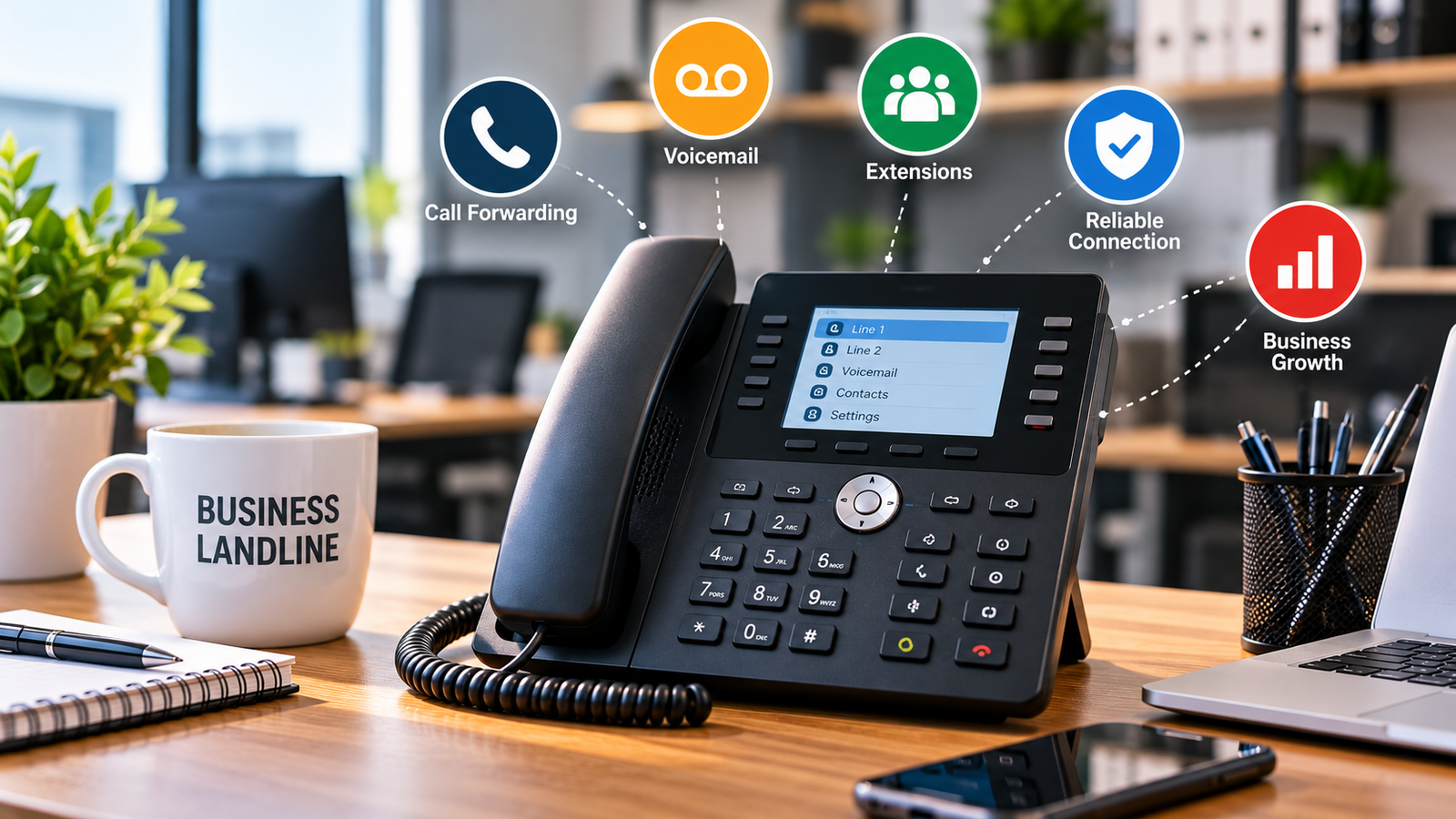
A reliable phone connection helps a company answer customer questions, manage orders, and build trust. Even with email, websites, and messaging apps, many customers still prefer speaking directly with a business. A business landline gives a company a dedicated number for customer calls, staff communication, and daily operations.
Small shops, clinics, offices, service providers, and growing companies may all benefit from a separate business number. However, traditional phone lines are not the only option. Modern services can combine landline-style calling with internet-based features, mobile apps, and call management tools.
Before choosing a business landline, consider your budget, call volume, location, and the way your employees work. The right setup should meet your current needs without adding costs for features your team rarely uses.
What Is a Business Landline and How Does It Work?
A business landline is a telephone service used for professional communication. It gives a company a number that customers can call to ask questions, request services, place orders, or contact a department. Unlike a personal mobile number, it keeps business communication separate from private calls.
A traditional landline usually connects through a telephone network and physical line. The phone receives incoming calls and allows employees to make outgoing calls. Depending on the provider and plan, the service may include caller ID, call waiting, voicemail, and other basic features.
Some companies need more than one phone. A business landline setup can connect several handsets through a private branch exchange, often called a PBX. This allows employees to use extensions and transfer calls between departments. For example, a customer calling a repair company could speak with reception first and then be transferred to the technician or accounts team.
Modern internet-based phone services offer another option. Voice over Internet Protocol, or VoIP, carries calls through an internet connection. Some VoIP services use business landline numbers and desk phones, while others let employees answer calls through computers and mobile apps.
The difference matters because a phone that looks like a traditional office handset may use internet technology instead of a copper telephone line. When comparing a business landline with other options, ask the provider how calls are delivered and what equipment is required.
A simple setup may be enough for a one-person business. A company with multiple employees may need extensions, call forwarding, shared voicemail, or an automated greeting. Choose the setup according to how your team handles calls every day.
Main Benefits of Having a Dedicated Business Number
A dedicated business number gives customers a clear way to reach your company. It also helps employees separate work calls from personal communication. This can make daily tasks easier to organise and help a company present a more professional image.
A more professional customer experience
Customers often want quick answers about prices, opening hours, appointments, or orders. A dedicated number helps them contact the business landline without searching for an employee’s personal contact details. A recorded greeting can also explain business hours and tell callers what to do next.
Better call management
When several employees handle calls, a shared system can help route customers to the right person. Call transfer, call waiting, and voicemail can reduce confusion when staff are busy. Some services also offer call queues, which can be useful for companies that receive many enquiries.
Clear separation between work and personal life
Using a personal mobile for every customer call can make it difficult to manage working hours. A dedicated business line helps establish clearer boundaries. Depending on the service, employees may be able to turn off work notifications after business hours while keeping personal calls separate.
Support for business growth
A company may start with one phone and later add employees or another location. A suitable business landline arrangement can support extra extensions or numbers, depending on the provider. Planning for future needs helps avoid an expensive change when the business expands.
Improved team coordination
Employees can transfer calls, share voicemail messages, and follow agreed procedures for customer enquiries. For example, a sales employee can send a billing question to accounts rather than asking the customer to call another number.
These benefits depend on the service and features selected. A basic line may not include advanced routing or mobile access, so confirm what the provider offers before signing an agreement.
Business Landline Costs, Equipment, and Features
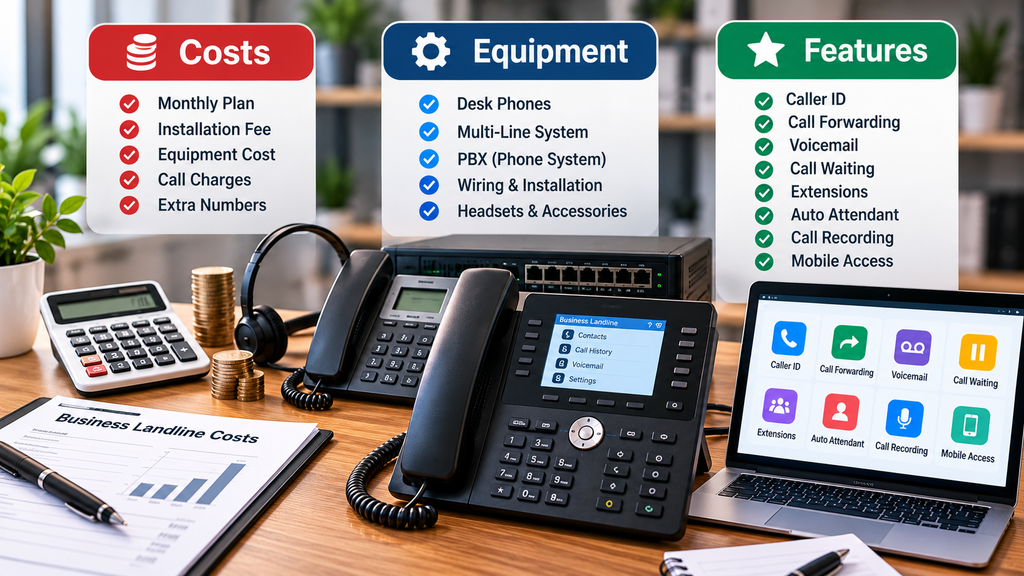
The total cost depends on the provider, location, number of lines, call plan, and equipment. Some services charge a monthly fee for each line. Other plans charge per user or bundle calling with additional features.
When reviewing a business landline quote, look beyond the advertised monthly price. Ask about installation, activation, telephone handsets, wiring, maintenance, taxes, international calls, and extra numbers. If you need a PBX, find out whether the equipment is purchased, rented, or included in the plan.
A basic office phone may be suitable for a small business with low call volume. Companies with several departments may need a multi-line system or PBX. Larger teams may benefit from call queues, automatic attendants, reporting, and integration with customer management software.
Here are useful features to consider:
- Caller ID: Shows information about incoming calls when supported.
- Call forwarding: Sends calls to another number when staff are away.
- Voicemail: Allows customers to leave messages outside business hours.
- Call waiting: Alerts employees when another caller is trying to reach them.
- Extensions: Let callers reach different employees or departments.
- Automated attendant: Plays a greeting and offers menu options.
- Mobile access: Allows calls to reach staff outside the main office, if supported.
Not every company needs all these features. A local shop may only need a reliable number and voicemail, while a customer service team may need extensions and call queues.
Compare at least two or three providers when possible. Ask each one to quote the same number of users, calling requirements, and features. This makes it easier to compare the full cost rather than choosing based on a headline price.
Also check whether you can keep your existing number if you change providers. Number transfer rules depend on the location and service, so confirm the process before cancelling an existing line.
Business Landline vs VoIP: Reliability, Security, and Selection
Traditional landlines and VoIP services each have advantages. A traditional line may suit a business that wants simple calling and already has suitable wiring. VoIP can offer flexible access, easier user changes, and features such as mobile apps or online call management.
However, reliability depends on the actual service. Traditional telephone equipment may continue to work during some local power failures, but this is not guaranteed for every modern setup. VoIP usually needs a working internet connection and powered network equipment. A router or modem without backup power may stop calls during an outage.
Before choosing a business landline or switching to VoIP, ask what happens if the telephone service, internet connection, or office power fails. Options may include call forwarding, a backup mobile number, an uninterruptible power supply, or an alternative internet connection.
US B2B Companies Small Size SaaS AI Services and Business Benefits
Security is another factor. Business calls and account settings may involve customer information. Use strong passwords for online phone accounts, enable multi-factor authentication where available, and limit administrative access to trusted employees. Ask the provider how it handles account protection and suspicious calling activity.
If your company records calls, check the applicable laws and tell callers when required. Do not assume that recording rules are the same in every country or region.
To choose a suitable provider, write down your requirements before requesting quotes. Include the number of employees, expected call volume, work locations, business hours, and any software integrations you need. Ask about customer support, service availability, contract terms, number transfer, and cancellation fees.
A small company with one office and few daily calls may prefer a basic service. A growing business with remote employees may find an internet-based system more practical. The best choice is the one that meets your real needs and has a clear backup plan.
Conclusion
A dedicated phone service can help a company manage customer enquiries, maintain a professional image, and organise staff communication. The right setup depends on the size of the business, call volume, budget, available infrastructure, and the features employees need.
Phone Systems for Small Business: How to Choose the Right Setup
Before selecting a business landline, compare traditional telephone services with VoIP and other modern options. Check the full cost, equipment requirements, reliability, security, and support offered by each provider. Test call quality where possible and confirm how the service will work during an outage.
A thoughtful choice can help your company serve customers more effectively without paying for unnecessary features. Review your phone needs as the business grows and update the setup when your current service no longer fits.
1 thought on “Business Landline: Benefits Costs Features, and How to Choose”