
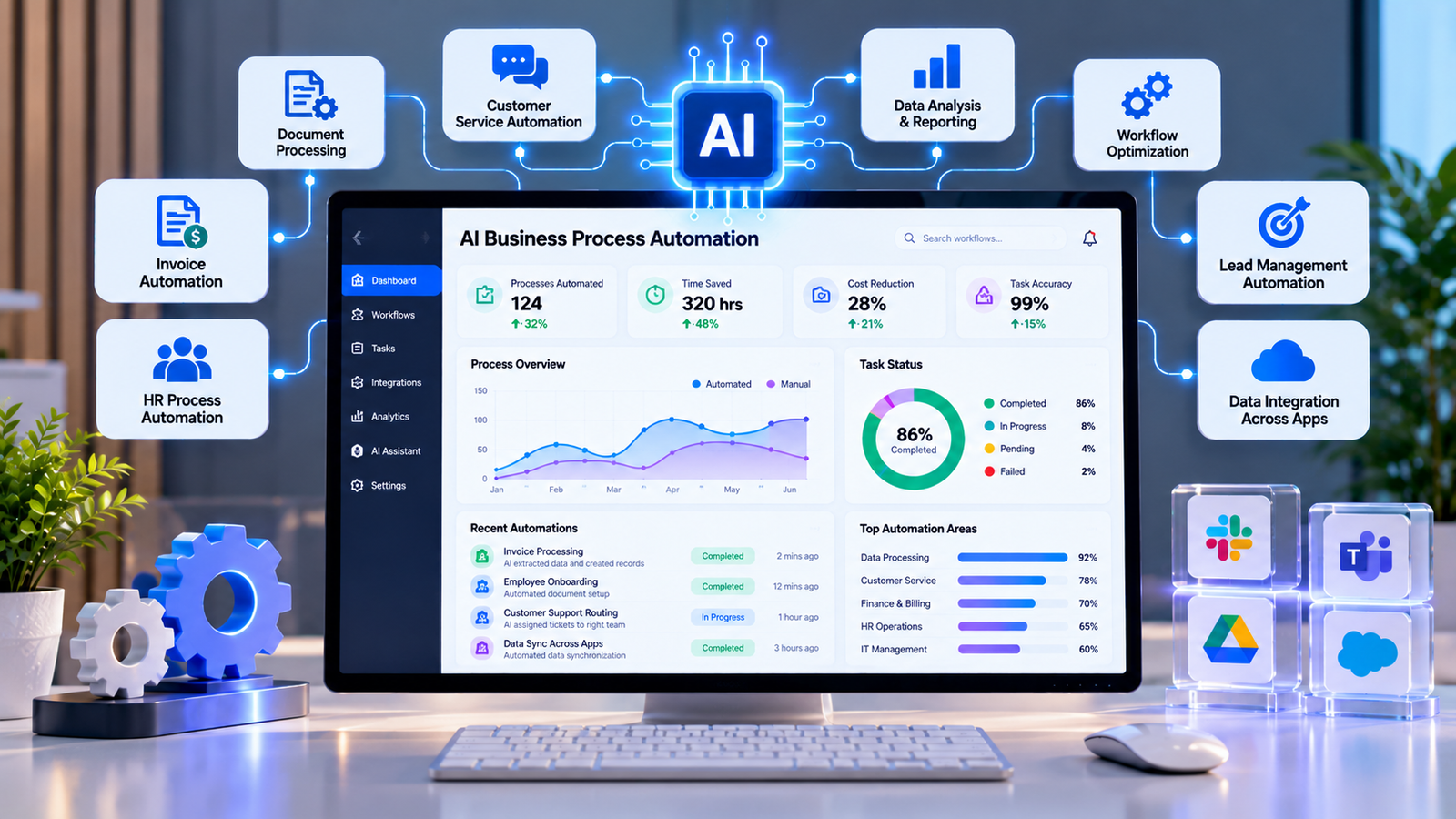
Businesses handle many tasks every day, from answering customer questions to checking invoices and updating records. ai business process automation helps companies use artificial intelligence to manage these tasks, reduce manual work, and improve daily operations. It can sort information, process documents, and connect business systems. With the right tools, companies can save time, reduce errors, and allow employees to focus on work that needs human skills.
ai business process automation helps companies improve these tasks with artificial intelligence and automated workflows. It can review information, follow set rules, sort requests, and help workers make better decisions. Instead of replacing every human task, it can support staff and reduce repeated work.
Companies can use ai business process automation in sales, customer support, finance, human resources, and many other departments. The best results come when a business starts with a clear problem and chooses a tool that fits its needs.
What Makes AI Automation Different
Traditional automation follows fixed rules. For example, a basic system may send an email after a customer fills out a form. It works well when every request follows the same steps. However, it may struggle when information is missing or a request uses different wording.
ai business process automation adds AI features that can help systems handle more complex information. Depending on the tool, AI may read documents, sort messages, find patterns, or suggest the next action. This gives teams more support when daily tasks do not always look the same.
For example, a company may receive hundreds of customer emails each day. An AI tool can sort messages by topic and send billing questions to the finance team. It may also identify urgent requests for quick review. Staff can then spend less time sorting emails and more time solving customer problems.
Another benefit of ai business process automation is that it can connect different business systems. A company may use one tool for customer records and another for invoices. With suitable integrations, approved information can move between these systems without repeated manual entry.
Still, AI does not make every process better by itself. Businesses need clear rules, reliable data, and human checks for important decisions.
Daily Business Tasks That AI Can Improve
Many companies begin with simple tasks that happen often. These tasks may seem small, but they can take up many work hours over a month. ai business process automation can help reduce this workload when the process is suitable for automation.
Invoice processing is one useful example. A system may read an invoice, capture the supplier name, find the total amount, and send the record for approval. If a number looks unusual or a required field is missing, the system can flag it for a worker to check.
Customer service is another area. AI tools can answer common questions, suggest replies, and send complex cases to the right team. Staff should remain available for sensitive complaints, unusual problems, and cases that need personal judgment.
In human resources, ai business process automation can support form collection, interview scheduling, employee onboarding, and document reminders. It can help staff track which forms are complete and which steps still need attention. Hiring decisions should remain under proper human review.
Sales teams can also use automation to organize leads. A system may collect details from approved forms, update customer records, and remind staff to follow up. Workers can then focus on useful conversations instead of copying information between tools.
The goal is not to automate every task. Companies should select work that is repeated, easy to measure, and safe to manage with clear checks.
How to Choose the Right AI Automation Tool
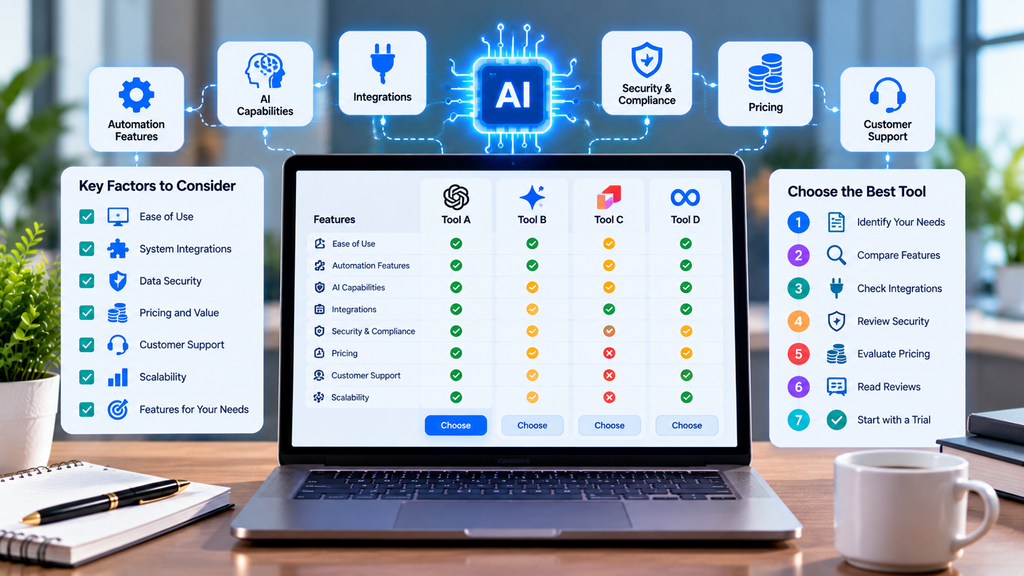
The right tool depends on the company’s size, budget, systems, and daily needs. Before buying software, managers should map the process they want to improve. They should list each step, identify delays, and find where errors happen most often.
A good ai business process automation tool should solve a real problem rather than add another complicated system. Businesses should check whether it works with their current software, protects their data, and allows staff to review important actions.
Here are key points to review before making a choice:
- Ease of use: Staff should be able to learn the main features without long training.
- System connections: The tool should work with the apps the company already uses.
- Data protection: Check access controls, storage rules, and security options.
- Human review: The system should allow workers to check uncertain or high-risk results.
- Clear pricing: Review setup fees, monthly costs, usage limits, and support charges.
- Reporting: Look for useful records that show what the system did and when.
Companies should also ask the provider how the AI handles incorrect information. Some tools may produce wrong results, misunderstand documents, or classify a request incorrectly. A strong setup should include a way to catch these mistakes before they affect customers or business records.
A small pilot can help a company test ai business process automation before using it across the whole business. Choose one workflow, set clear goals, and compare the results with the old process. Expand only when the tool proves useful and staff understand how to use it safely.
Measure Results and Manage the Risks
Automation should produce results that a business can measure. Without clear targets, managers may pay for software without knowing whether it helps. Before launch, record how long the current process takes and how often errors occur.
After introducing ai business process automation, compare the new results with the original figures. Useful measures include time spent on a task, processing cost, error rate, response time, and the number of requests completed. The best measures depend on the workflow.
For example, a finance team may track how long it takes to process an invoice. A support team may measure how quickly customers receive a first response. A sales team may review whether reminders help staff contact leads on time.
There are risks to manage as well. AI tools can make mistakes, and poor source data can lead to poor results. Systems may also expose private information if permissions are set up incorrectly. Businesses should limit access to sensitive records and follow relevant privacy laws.
Human review is especially important when a workflow affects money, employment, legal duties, or customer rights. ai business process automation should support responsible decisions, not remove accountability from the people who own the process.
Companies should train workers to understand what the tool can and cannot do. Staff need a clear way to report errors, pause a workflow, and ask for help. Regular reviews can show when rules need updates or when a process no longer fits the business.
Build a Practical Automation Plan
A successful project starts with one clear goal. Businesses should avoid changing every department at once. Instead, choose a task that creates repeated work but has manageable risks.
First, map the current process and ask the people who perform it where delays happen. Next, check the quality of the information the system will use. Missing records, unclear naming, and duplicate entries can weaken automation results.
Then choose a tool and test it with a small group. Explain the new process to staff and provide simple instructions. During the test, check the results often and record mistakes. Make changes before allowing the workflow to handle more work.
Phone Systems for Small Business: How to Choose the Right Setup
A well-planned ai business process automation project also needs an owner. This person should monitor results, manage feedback, and make sure the workflow follows company rules. Teams should know who can approve changes and who will respond when the system fails.
As the company gains experience, it can consider other workflows. It may connect customer support with order records or automate routine report preparation. Each new project should have its own goal, risk review, and success measures.
Conclusion
AI can help businesses manage repeated work, organize information, and improve the flow of daily tasks. However, useful results depend on the process, the quality of data, and the checks around the system.
Business Process Automation in Healthcare for Faster and Better Patient Care
Companies should start small, protect sensitive information, train staff, and measure results before expanding. With careful planning, ai business process automation can reduce routine effort and give employees more time for work that needs human judgment. The strongest approach combines suitable technology with clear rules and responsible people.