Running a business means making many small decisions every day. Owners answer customers, manage orders, check payments, assign work, and plan future goals. When these tasks are spread across different apps and notebooks, it becomes harder to see the full picture. software for business management can bring important records and daily tasks into a more organized system, helping teams spend less time searching for information.
Every business has different needs. A retail shop may need stock records and sales reports, while a consulting firm may need client details, project deadlines, and invoices. The best system depends on the work a company does, its budget, and the problems it wants to solve.
Start With the Problems That Slow Your Business Down
Before buying new software, list the tasks that cause delays or mistakes. Ask employees which information they often struggle to find and which jobs they repeat each week. You may discover that customer details sit in emails, project updates are shared through messages, and payment records are saved in separate spreadsheets.
A suitable software for business management setup can help reduce these problems by bringing related information together. For example, if employees forget to follow up on quotes, a shared sales tracker with reminders may help. If orders are delayed because stock counts are wrong, inventory tracking may be the better first step.
Choose one or two problems to solve first. Trying to change every process at once can confuse employees and make it difficult to measure results.
Record how the current process works before making changes. Note how long a task takes, how often mistakes happen, and how many requests remain unfinished. These figures give you a starting point for measuring improvement.
This approach also helps prevent unnecessary spending. Software for business management, but that does not mean it will solve your company’s actual problems.
Choose Features That Match Your Business Model
Businesses need different tools depending on their industry and size. A store needs accurate product records, while a service company may need appointments and staff schedules. An agency may focus on client approvals, project deadlines, and team workloads.
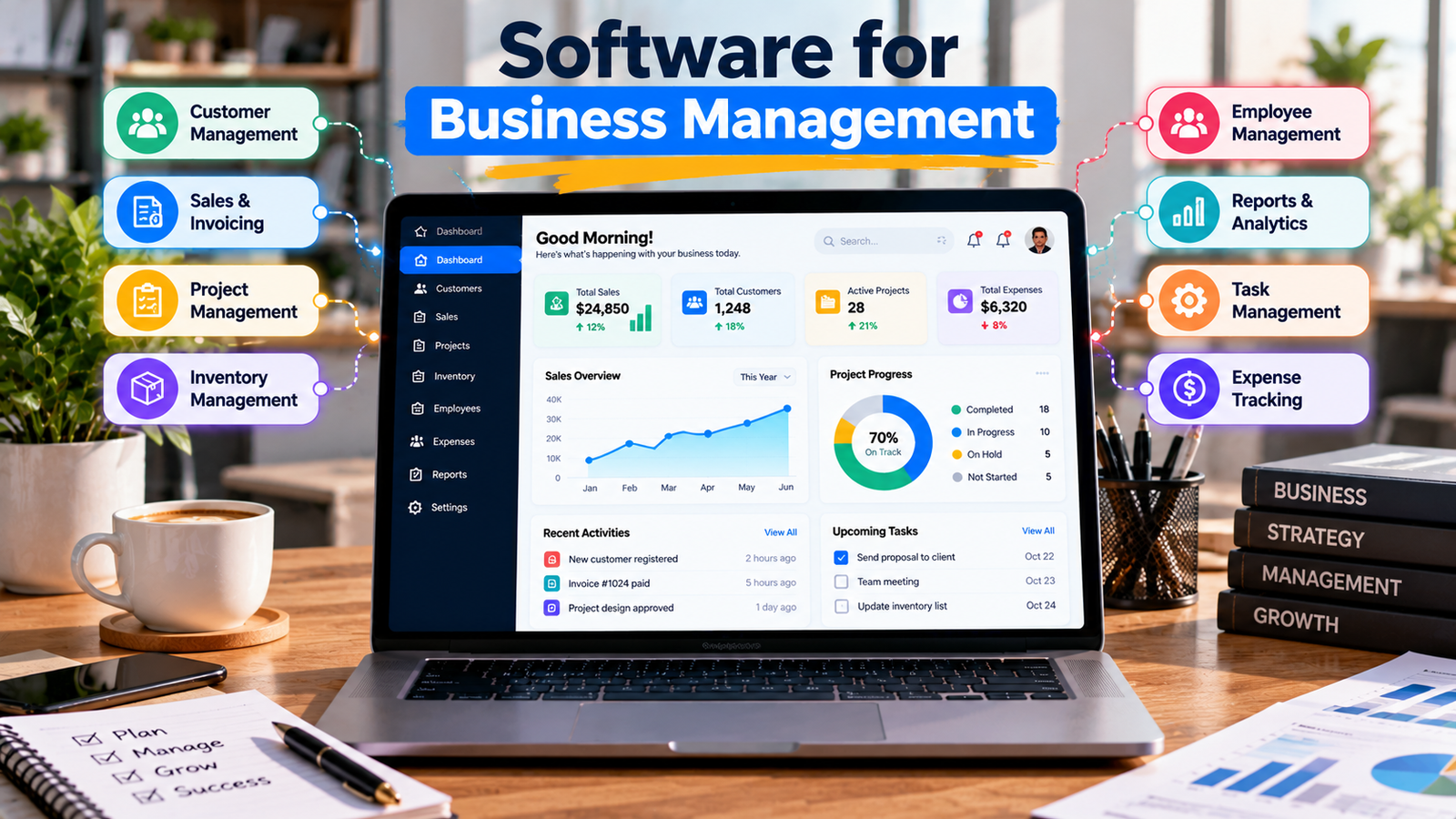
When comparing software for business management, begin with the features your team needs most.
- Customer Records
Customer management tools store contact details, purchase history, requests, and important notes. Employees can find relevant information without searching through old messages.
For example, a service company can review a customer’s previous appointments before arranging another visit. A sales team can check earlier conversations before contacting a potential client.
- Sales and Invoicing
Sales features help record orders, prepare invoices, and track payments. Some products can send payment reminders or connect with online payment services.
These tools can help owners see which invoices remain unpaid and which customers have completed their payments. However, check whether the product provides full accounting or only basic invoicing.
- Task and Project Planning
Task management features allow managers to assign work, set deadlines, and track progress. Team members can see their responsibilities and update tasks when work is complete.
This can be useful for marketing agencies, construction companies, consultants, and other businesses that handle several projects at once.
- Inventory Control
Businesses that sell physical products need reliable stock records. Inventory tools can track available items, incoming supplies, returns, and products that need reordering.
Accurate records can reduce the risk of selling products that are no longer available.
- Reporting
Reports help owners review sales, expenses, work progress, and customer activity. Before choosing software for business management, check which reports are included and whether you can export the information.
Do not assume every product includes payroll, advanced accounting, or stock control. Some systems need extra modules or connections with other apps.
Connect Your Business Tools and Reduce Repeated Work
One common source of wasted time is entering the same information into several systems. A team may record a sale in one app, type the customer’s details into another, and create an invoice in a third.
Every extra step creates more work and another chance for errors.
A well-connected software for business management system can reduce repeated data entry. For example, an approved order might update a customer record and pass the correct details to an invoicing tool. The exact result depends on the products and their settings.
Start by listing the apps your business already uses. These might include email, accounting software, payment services, online stores, calendars, and file storage tools.
Ask the software provider which integrations are included, which require an add-on, and whether extra fees apply.
Before moving important records, test the connection with a small sample. Software for business management, dates, prices, and order numbers transfer correctly. An integration that moves incomplete information can create more problems than it solves.
Keep a backup process for important tasks during the first few weeks. This can help employees continue working if a connection fails or a record needs correction.
Use Reports to Improve Business Decisions

Reports are useful when they answer clear questions. A dashboard full of charts may look impressive, but business owners need to understand what the figures mean and what action to take.
Software for business management may help companies review income, expenses, overdue invoices, sales by product, and project progress.
Choose measures that match your goals. If cash flow is a concern, review when customers pay and which invoices remain outstanding. If deliveries are late, check where orders wait for approval or stock.
Consider a small shop that sells products online and in person. Software for business management, but some products may have low profit margins or frequent returns. Comparing sales with costs can help the owner decide which products need attention.
Reports are only useful when the information behind them is accurate. Review unusual changes, check a sample of transactions, and investigate missing records.
A short weekly review may be more useful than a long report that nobody reads. Choose a few important measures, assign responsibility for each one, and agree on what action to take when results fall below expectations.
The right software for business management should make these reviews easier rather than create more paperwork.
Protect Customer Information and Business Records
Business systems often contain private customer details, financial records, supplier information, and internal plans. Data protection should be part of the buying decision from the start.
Check whether the product supports individual user accounts, role-based permissions, secure sign-in options, backups, and data exports.
Avoid sharing one password across the whole team. Each employee should have access only to the information needed for their role.
When setting up software for business management, decide who can add, edit, approve, or delete important records. For example, an employee might prepare an invoice while a manager approves a refund.
Clear responsibilities can reduce confusion and make important actions easier to review.
Ask the provider how you can recover your information if you close the account or move to another product. Keep suitable copies of important records and understand how the export process works.
Follow the privacy and record-keeping rules that apply to your location and industry. Software for business management, report suspicious activity, and correct mistakes.
Review access whenever an employee changes roles or leaves the company. These simple steps help protect business records as the team grows.
Compare the Full Cost Before Buying
A low starting price can look attractive, but the total cost may include setup, training, extra users, add-on features, customer support, and data migration.
Compare the likely yearly cost instead of looking only at the advertised monthly price.
The value of software for business management depends on whether it saves enough time or improves work enough to justify the expense.
Ask providers to explain user limits, storage limits, cancellation terms, and the cost of adding features later.
If a free trial is available, use it to complete real tasks. Software for business management, create an invoice, assign work, and review a report. This gives you a better idea of how the product will perform during normal business hours.
Create a simple comparison table with the features you need, total price, support options, integrations, and any concerns.
Ask employees who will use the system to test your leading options. Their feedback may reveal problems that do not appear during a product demonstration.
Avoid paying for advanced features before you need them. A small team may benefit more from a simple, reliable plan than from an expensive system filled with unused tools.
Choose a product that can grow with your company, but do not pay for capacity you are unlikely to use soon.
Introduce the System in Small Steps
Buying software is only one part of improving business operations. Software for business management.
Start with one workflow, such as creating quotes or tracking customer requests. Test the process with a small group before introducing it across the company.
Clean old records before importing them. Remove duplicates, correct important details, and decide which system will hold the official version of each record.
A gradual rollout of software for business management makes it easier to identify mistakes and limits disruption to daily work.
Give employees simple instructions and a place to ask questions. During the trial, collect feedback and keep a list of problems.
If employees must enter the same information in several places, check whether a setting or integration can remove that extra step.
Once the first workflow works reliably, move to the next one. Keep old records available until you have confirmed that the important information has transferred correctly.
After launch, compare the results with your starting figures. Check whether tasks take less time, fewer errors occur, and customers receive clearer updates.
If the system does not improve the process, adjust the setup or reconsider whether the product suits the task.
Prepare Your Business for Future Growth
A business may begin with one owner and a few customers, then grow into a team with several departments. Its needs will change as sales, staff numbers, and daily workloads increase.
The right software for business management should support current needs while allowing room for future growth.
This does not mean buying the largest plan from the start. Instead, check whether the provider allows more users, extra features, and higher usage limits when needed.
A service company might begin by managing appointments in a simple calendar. Later, it may need staff schedules, customer history, payment tracking, and performance reports.
Cash Flow Analysis: A Powerful Tool for Smarter Financial Management
A system that supports these features can reduce the need to move records repeatedly.
Review your needs regularly. A product that worked well last year may not suit a new business model. Software for business management, security, performance, and employee feedback at least once a year.
Also review whether the team still uses the features it pays for. Remove unnecessary steps and update workflows when business needs change.
The goal is to build a practical system that supports good decisions without making daily work more complicated.
Conclusion
Good business operations depend on clear records, useful reports, secure access, and processes that employees can follow. The goal is not to collect the most apps. It is to make everyday work easier to manage.
Scanning and Data Capture Automation in Modern Financial Management
Software for business management can help teams organize customer information, track tasks, review finances, and connect the tools they already use. Its value depends on choosing features that match real needs, training employees, and checking results over time.
Start by identifying one important problem. Compare suitable options, test the workflow, and review the results before making a full change.
Keep costs visible, protect business records, and adjust the system as your needs change. With a practical setup and consistent use, a business can stay organized while giving owners more time to serve customers and plan future growth.
2 thoughts on “Software for Business Management to Improve Daily Business Operations”