
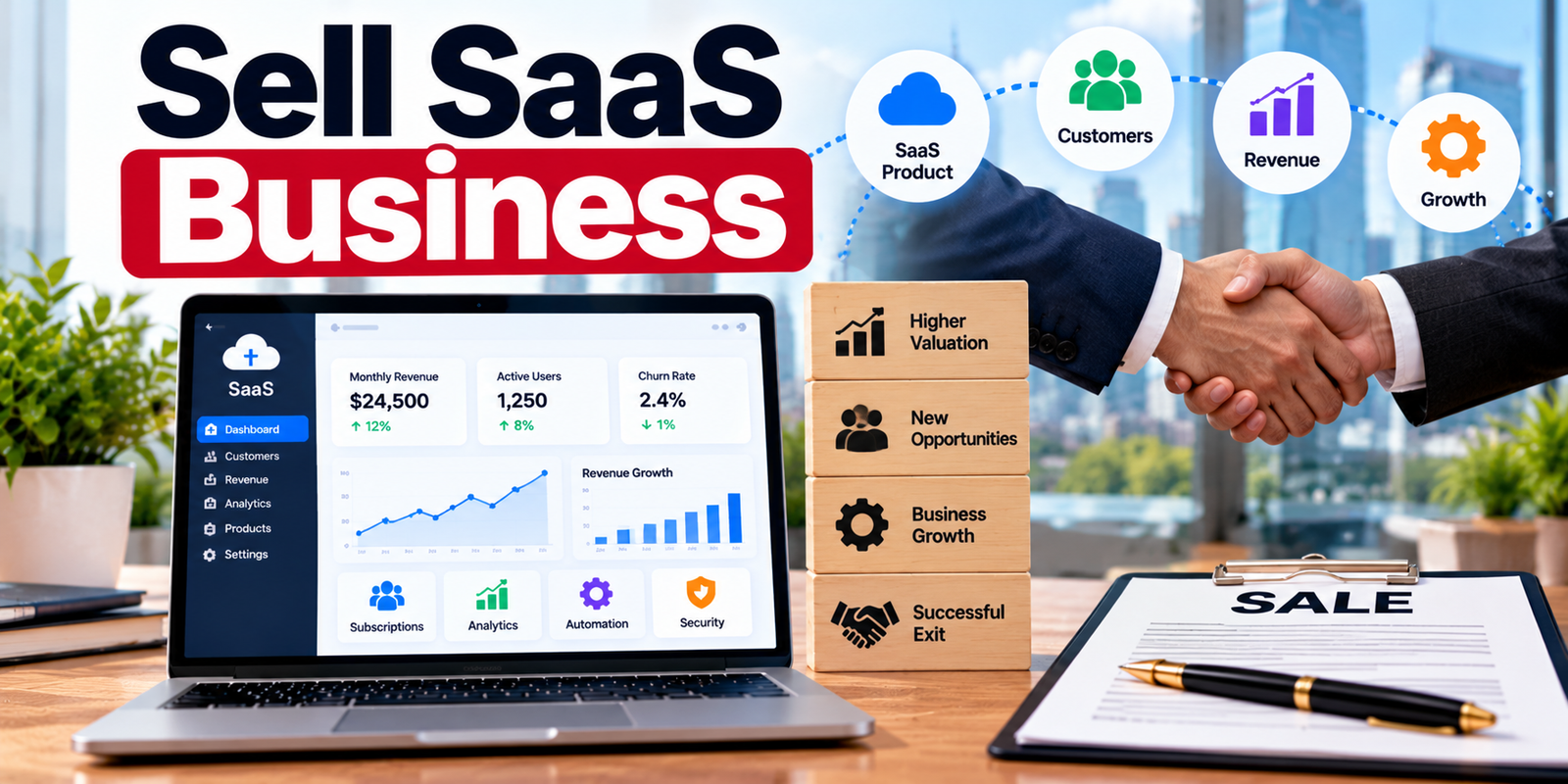
Building a software business takes time, money, and effort. You may have spent years developing your product, finding customers, and improving your service. At some point, you may want to move on to another project, raise funds, or take money out of the business. Selling can be one way to achieve that goal.
If you plan to sell saas business assets, you need more than a good product and a list of customers. Buyers want to understand revenue, expenses, customer retention, software ownership, and future growth. They also want proof that the business can continue running after the current owner leaves.
A well-planned sale can make the process easier and help buyers feel more confident. This guide explains how to prepare your business, estimate its value, find suitable buyers, and manage the sale from the first conversation to the final transfer.
Prepare Your SaaS Business Before Selling
Before you sell saas business operations, review how the company performs and how easily another person could take control. A business that depends on the founder for every customer request, software update, and sales decision may be harder to transfer than one with clear systems.
Start by reviewing your financial records. Prepare monthly revenue, operating expenses, profit, subscription income, refunds, and customer acquisition costs. Make sure the figures match your accounting records and payment processor statements. Buyers may request several years of records or at least a clear history of recent performance.
Next, review your subscription metrics. Monthly recurring revenue (MRR) shows the recurring income expected each month, while annual recurring revenue (ARR) expresses recurring income on a yearly basis. Customer churn measures how many customers leave during a period. Strong retention and predictable income can help buyers assess the business more confidently.
When preparing to sell saas business assets, also organise your technical records. These may include source code, hosting details, software licences, third-party services, system documentation, and development agreements. Confirm that the company has the rights needed to transfer the product.
Write down routine tasks, such as handling support requests, billing customers, releasing updates, and managing user access. Clear instructions help a new owner understand the operation without depending on your memory.
Finally, fix avoidable problems before listing the business. Resolve overdue support issues, remove unused subscriptions, update outdated documentation, and explain any unusual changes in revenue. sell saas business do not expect every business to be perfect, but they do expect honest information.
Understand the Value of Your SaaS Business
A realistic valuation helps you set expectations and negotiate with potential buyers. If you want to sell saas business assets at a fair price, you should understand which financial and operational factors affect the offer.
Smaller SaaS businesses are often assessed using profit measures such as seller’s discretionary earnings (SDE) or EBITDA, depending on the company’s size and structure. Some buyers also focus on recurring revenue, especially when the business has strong growth and customer retention. The right valuation method depends on the type of business and the deal.
For example, a software company with stable profits, loyal customers, and low owner involvement may appeal to a different buyer than a new product with fast user growth but little profit. Revenue alone does not tell the full story.
Before you sell saas business operations, review these important factors:
- Recurring revenue: Is subscription income stable, growing, or declining?
- Customer retention: Do customers continue paying, or do many cancel?
- Profitability: How much money remains after normal operating costs?
- Growth potential: Can the buyer reach new customers or introduce useful features?
- Owner dependence: Can the business run without your daily involvement?
- Technical risk: Is the software reliable, documented, and legally owned by the business?
Avoid choosing a sell saas business price based only on a number you saw online. Valuation multiples vary by business quality, market conditions, size, growth, and deal structure. A professional valuation or advice from an experienced SaaS broker may help you develop a more defensible asking price.
It is also useful to understand the difference between the asking price and the final amount you receive. Broker fees, legal costs, taxes, debt, escrow charges, and any payments held back under the agreement can affect your proceeds. Ask a qualified accountant or lawyer about the rules that apply to your situation.
Where to Find Buyers for Your SaaS Business
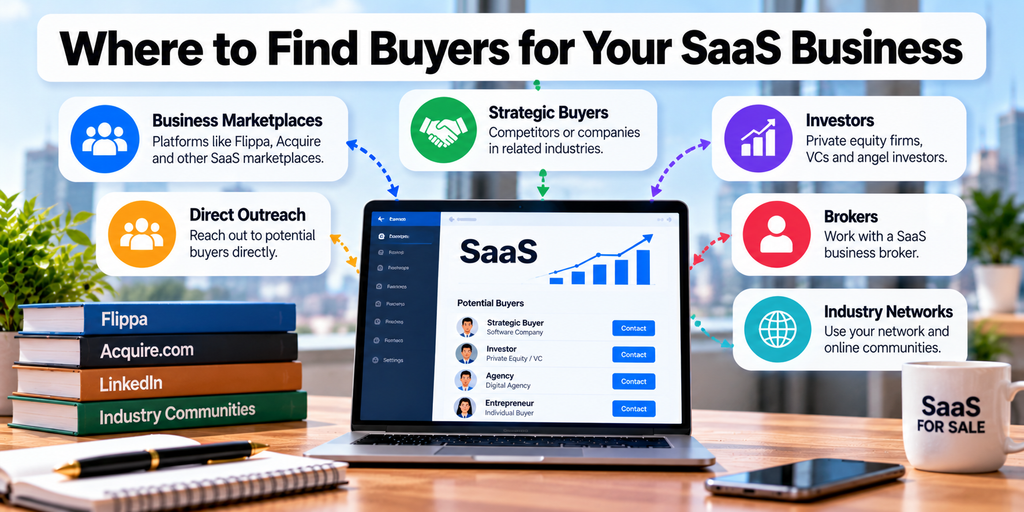
Finding the right buyer can be just as important as setting the price. When you sell saas business assets, you can approach buyers directly, use a business marketplace, or work with a broker who understands software transactions.
A marketplace may help you reach entrepreneurs and investors who are already looking for online businesses. Examples include Flippa and Acquire.com. Before choosing a platform, review its current listing rules, fees, verification process, buyer access, and transaction support.
Direct outreach can also work. Your potential buyers may include competitors, agencies, companies serving the same customers, sell saas business that could add your software to their existing product range. A strategic buyer may value your customer base, technology, or market position because it complements their current operations.
If you plan to sell saas business ownership through direct contact, create a short summary that explains what the product does, who uses it, its revenue model, and its main growth opportunities. Do not publish confidential customer details, passwords, source code, or sensitive financial records in a public listing.
Screen interested buyers before sharing private information. You can ask about their acquisition goals, funding, experience, and expected timeline. A non-disclosure agreement may be appropriate before sharing confidential details, although it does not replace careful access controls.
A broker can help prepare marketing materials, approach buyers, organise offers, and manage negotiations. This may be useful for a more complex transaction, but the broker’s fees and responsibilities should be clear in writing.
Compare buyers on more than the headline price. A buyer offering a slightly lower amount with clear funding and a realistic closing plan may be a safer choice than one offering more but asking for uncertain terms.
Manage Offers, Due Diligence, and the Sale Agreement
Once you receive interest, buyers may ask for more information before making a firm offer. Due diligence is the process of checking the business’s financial, legal, technical, and operational details. It helps the buyer confirm what they are purchasing and identify risks.
If you sell saas business assets, prepare a secure folder containing relevant records. Depending on the deal, this may include financial statements, subscription reports, customer contracts, employee or contractor agreements, intellectual property documents, software licences, privacy policies, and technical documentation.
Give buyers access in stages. Begin with high-level information and provide sensitive records only when appropriate safeguards are in place. Avoid sharing production passwords or unrestricted customer data. Use secure document access and seek professional advice on privacy obligations.
When an offer arrives, review the full structure. The agreement may include a cash payment at closing, instalments, an earn-out tied to future results, or a transition period during which you help the new owner. Each arrangement creates different risks.
Before you sell saas business ownership, clarify which assets and liabilities are included. A share sale transfers ownership of the company, while an asset sale transfers specified assets under the agreement. The legal, tax, and operational effects can differ, so get advice from professionals who understand the relevant jurisdiction.
US B2B Companies Small Size SaaS AI Services and Business Benefits
Pay close attention to representations, warranties, indemnities, non-compete terms where enforceable, customer contract transfers, and any obligations that continue after closing. Do not agree to terms you do not understand.
Use a lawyer experienced in software or sell saas business acquisitions to review the final documents. If escrow is used, confirm the provider, release conditions, and process for resolving disputes. Keep written records of all agreed changes.
The transaction is complete only when the required closing conditions have been met. Follow the agreed process for transferring domains, source code, accounts, documentation, customer communications, and administrative access.
Conclusion
Selling a software company is a major decision that deserves careful preparation. A clear record of revenue, customer retention, operating costs, and software ownership can help buyers understand the business and make informed offers.
If your goal is to sell saas business assets, start by improving your records and documenting routine operations. Then develop a realistic valuation, choose a suitable route to market, and screen potential buyers before sharing confidential information.
SaaS IT Management Software: Features, Benefits, and How to Choose
Compare offers by price, payment terms, buyer reliability, and the obligations that remain after closing. Use qualified legal and financial advisers to review the transaction, especially when customer data, intellectual property, or international buyers are involved.
A successful sale is not simply about finding someone willing to pay. It is about reaching an agreement that reflects the business’s real condition, protects both parties, and allows the software and its customers to move forward with as little disruption as possible.