

Starting a company requires more than a good idea. Business owners must choose a legal structure, prepare documents, understand state rules, and plan for future costs. If you want to build a company in corporation maryland, learning how registration works can help you avoid common mistakes.
A corporation maryland can suit entrepreneurs who want to create a separate legal business entity. It can also support plans to bring in investors, issue shares, and build a company with a formal management structure. However, every business has different needs, so you should compare your options before filing.
This guide explains the main steps, important documents, ongoing duties, and practical decisions that can help you prepare for business ownership in Maryland.
What Business Owners Should Know Before Registering
Before starting a corporation Maryland business owners should understand what incorporation means. A corporation is a legal entity that exists separately from its owners. It can own property, enter contracts, hire workers, and conduct business under its registered name.
This structure may help protect shareholders from some business debts and legal claims. However, this protection has limits. Personal guarantees, certain legal violations, and other circumstances can create personal liability. Good records and responsible management remain important.
When planning a corporation Maryland entrepreneurs should also compare a corporation with a limited liability company. Both structures can separate business activities from personal affairs, but they differ in management, ownership, taxation, and reporting rules.
A corporation commonly uses shareholders, directors, and officers. Shareholders own shares, directors oversee major decisions, and officers manage daily activities. corporation maryland may have a simple management structure, but they still need to follow the rules that apply to their entity.
An LLC often offers more flexibility in management and may require fewer formal corporate procedures. The right choice depends on your goals, tax position, ownership plans, and future funding needs. Consider speaking with a qualified accountant or business attorney before making a final decision.
How to Register a Corporation in Maryland
The registration process starts with preparation. Before filing a corporation Maryland application, choose a suitable business name and check whether it is available through the state’s official business records.
Your name should be clear, professional, and suitable for your industry. It should also meet Maryland’s naming rules. Check for similar names that could confuse customers or create legal problems. If you plan to use a different public brand name, check whether you need to register a trade name separately.
Next, prepare the Articles of Incorporation. This document establishes the corporation under state law. The required information can depend on the type of corporation, but filings commonly include the business name, principal office, resident agent details, and information about shares when applicable.
Maryland uses the State Department of Assessments and Taxation, known as SDAT, to process business formation filings. You can use the official Maryland Business Express website to review registration options and submit eligible documents online.
You must also select a resident agent. This person or eligible business receives official legal papers for the corporation. Maryland sets eligibility rules for resident agents, so confirm that your choice meets the state’s requirements.
The state requires a suitable corporation maryland street address for the principal office. Review the official instructions carefully before submitting your application. Incorrect addresses, missing information, or incomplete documents can cause delays and extra work.
After approval, keep your formation documents and state identification number in a safe place. You may need these records when opening a business bank account, completing tax registrations, or applying for permits.
Costs and Documents to Plan For
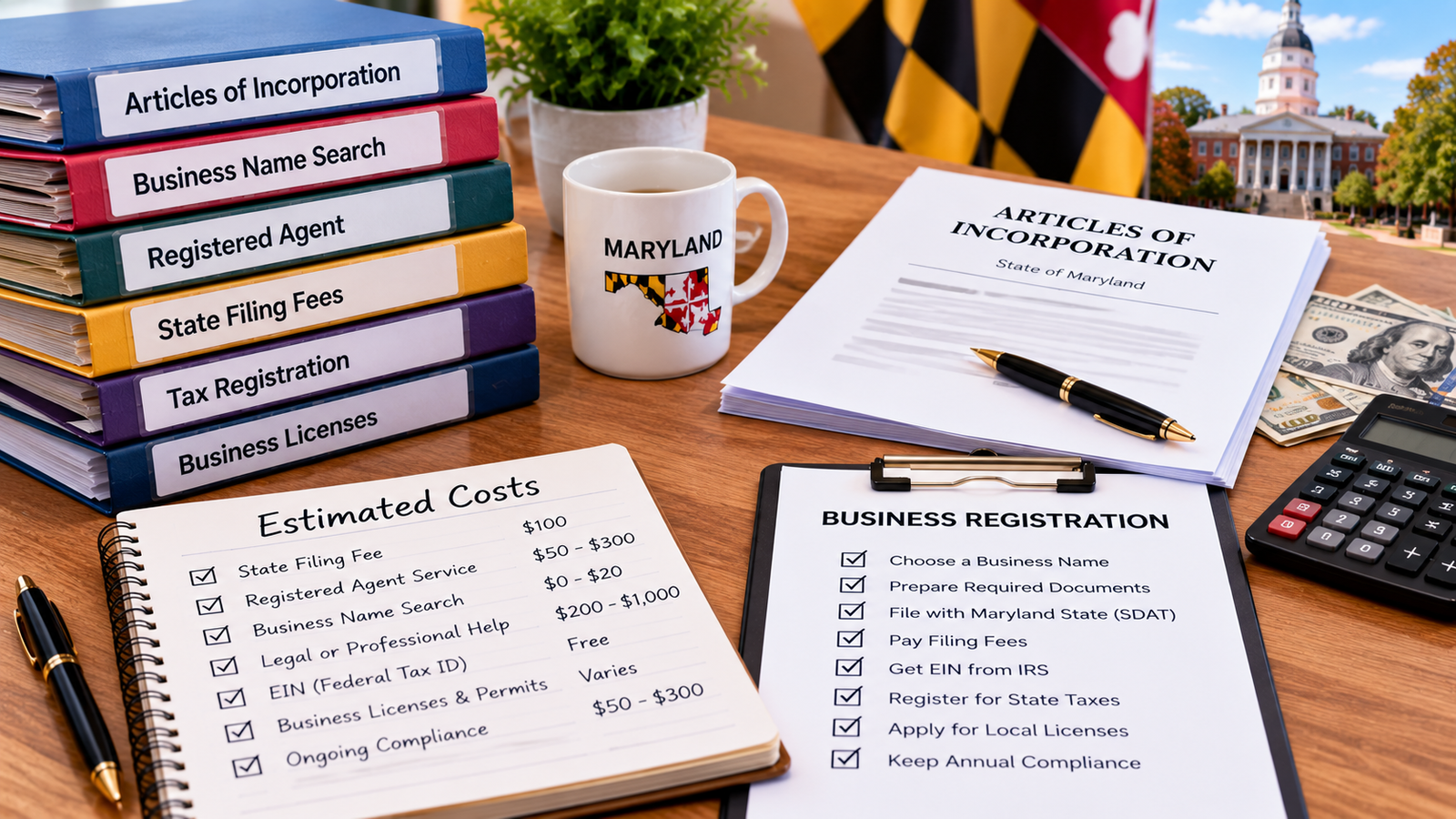
The cost of forming a corporation Maryland business owners choose will depend on the filing type and any extra services they select. State filing fees can change, so check the current fee schedule before submitting payment.
Your initial budget should include more than the formation fee. You may need to pay for legal advice, accounting services, a resident agent service, business insurance, permits, and bookkeeping software. These costs vary based on the size and type of your company.
Prepare a list of documents before beginning the application. Depending on your situation, you may need the Articles of Incorporation, resident agent information, a business address, ownership details, and supporting documents.
Once the state approves the filing, consider obtaining an Employer Identification Number from the Internal Revenue Service if your business needs one. An EIN is commonly used for federal tax purposes, hiring employees, and opening business bank accounts.
A corporation Maryland company may also need to register for applicable Maryland tax accounts. The exact requirements depend on its activities, employees, sales, and other circumstances. Check the Maryland Comptroller’s guidance to identify the registrations that apply.
If you plan to sell regulated products, offer professional services, or operate from a physical location, you may need additional state or local licenses. Requirements can differ by county, city, and industry. Check them before opening your doors.
Keep copies of receipts, submitted forms, approval notices, and tax registration documents. Organized records can make future filings easier and help you answer questions from banks, accountants, and government agencies.
Annual Reports and Daily Business Responsibilities
Registration is only the beginning. A corporation Maryland company must pay attention to its ongoing state filing duties and other legal responsibilities. Missing a deadline can lead to fees, loss of good standing, or other problems.
Maryland generally requires registered business entities to file an annual report. The usual deadline is April 15, although an approved extension may change the deadline for a particular filing year. Always confirm the current instructions with SDAT.
Some corporation maryland must also file a personal property tax return. This requirement depends on the business and its property, among other factors. Review the current rules instead of assuming that every company has identical reporting duties.
Good standing matters because banks, customers, suppliers, and other organizations may ask for proof that a company has met its state obligations. Keep a calendar of filing dates and assign responsibility for completing each task.
A corporation Maryland owner should also maintain clear financial records. Record income, expenses, payroll, purchases, and business transactions. Separate business and personal finances, and reconcile bank statements regularly.
Corporations should follow the governance rules that apply to them. This may include maintaining bylaws, documenting major decisions, recording share ownership, and keeping suitable meeting or written-consent records. Your specific duties depend on the corporation’s structure and applicable law.
Tax planning deserves regular attention too. Federal and state tax duties may vary with the corporation’s income, activities, employees, and tax classification. A qualified tax professional can help you understand filing dates, deductions, payroll duties, and other obligations.
If your company changes its principal office or resident agent, update the relevant information with the state as required. Keeping official records current helps ensure that important notices reach the right place.
Practical Ways to Build a Strong Business
A successful corporation needs more than legal documents. It also needs a clear market, sound financial planning, reliable customer service, and a realistic growth strategy.
Start with a business plan that explains what you sell, who your customers are, and how the company will earn revenue. Research competitors and estimate your main costs before investing heavily in equipment, stock, staff, or advertising.
For a corporation Maryland entrepreneurs are developing, local market research can reveal useful opportunities. Study customer needs, compare competitor prices, and learn about the area where you plan to operate. Use this information to shape your products and marketing.
Create a business budget that covers both startup expenses and regular operating costs. Include rent, software, supplies, insurance, wages, taxes, and emergency funds where appropriate. Review actual spending against your plan every month.
Business Landline: Benefits Costs Features, and How to Choose
Build a professional presence online. A clear website, accurate contact details, useful service information, and consistent branding can help customers learn about your company. Keep business listings updated and respond to customer questions in a helpful way.
Protect sensitive information with secure accounts, strong passwords, regular backups, and suitable access controls. Make sure workers understand how to handle customer details and business records.
Finally, review your progress at set times during the year. Track sales, customer feedback, cash flow, and operating costs. Use these figures to identify problems early and decide where the business should improve.
Conclusion
Starting a company involves legal, financial, and practical decisions. Understanding the registration process, preparing the right documents, and checking current state requirements can make the first steps easier.
SaaS IT Management Software: Features, Benefits, and How to Choose
Before forming a corporation Maryland business owners should compare available structures, review costs, choose an eligible resident agent, and prepare the required filing information. After registration, they should keep accurate records, meet annual filing duties, and check which taxes and licenses apply.
Use official Maryland resources for current forms, deadlines, and fees. Professional legal or tax advice can also help you make decisions that suit your business. Careful planning from the start gives your company a clearer path toward steady and responsible growth.