

Running a contracting business takes more than completing construction jobs. Contractors must manage workers, prepare estimates, send invoices, track materials, and keep clients informed. These tasks can become hard to manage when a business handles several projects at once. The right contractor software for small business can help owners organize daily work, control costs, and keep projects moving.
Small contractors often work with limited staff and budgets. They may not have a full-time office manager or accountant. contractor software for small business, owners spend many hours handling paperwork instead of finding new clients or supervising jobs. A suitable digital system can bring important business tasks together in one place.
However, every contracting business has different needs. A painting contractor may need simple estimates and invoices, while a general contractor may need project schedules, subcontractor records, and cost reports. Understanding these needs helps owners choose tools that support their work without adding unnecessary costs.
Why Small Contractors Need Better Business Tools
Many contractors start with spreadsheets, paper forms, and phone messages. These methods can work when the business has only a few jobs. Problems often appear when the number of clients and projects grows.
For example, a contractor software for small business an estimate on a computer, save a client’s address in a phone, and track material costs in a spreadsheet. When information sits in different places, workers may use old figures or miss important updates. Finding a document can also take valuable time.
Using contractor software for small business helps bring estimates, customer details, job schedules, and payment records into a more organized system. Depending on the product, users may also share updates with workers and clients.
Better organization can improve daily operations in several ways:
- Less paperwork: Store important job documents digitally.
- Faster estimates: Prepare quotes with saved services, prices, and material details.
- Clear schedules: Track job dates and assign work to team members.
- Better payment tracking: See which invoices are paid, pending, or overdue.
- Improved communication: Keep job updates and customer details easy to find.
- More useful reports: Review income, costs, and project performance.
These benefits matter because small businesses have limited time and money. Owners need tools that reduce unnecessary work and help them make informed decisions.
Still, buying software does not solve every problem automatically. Contractor software for small business must enter accurate information, update records, and teach workers how to use the system.
Features to Look for Before Buying Software
The best software depends on the type of contracting work a company performs. Before comparing products, owners should list their biggest daily problems and the features that could solve them.
A useful contractor software for small business solution may include the following features.
- Estimates and Quotes
Contractors need to provide clear prices before starting a job. Estimating tools can help prepare quotes with labor, materials, equipment, and other project costs.
Some systems allow users to save common services and pricing details. This can reduce repeated data entry and make estimates easier to prepare. Contractors should still review every quote before sending it to a client.
- Job Scheduling
Scheduling tools help owners plan work dates, assign workers, and track upcoming jobs. A calendar view can show when teams are available and where schedule conflicts may occur.
For businesses that work at several locations, mobile access can be useful. Workers may check job details while traveling or working at a customer’s property.
- Invoicing and Payments
Creating and tracking invoices is another important task. Software can help contractor software for small business prepare bills, record payments, and identify overdue invoices.
Some products support online payment options or reminders. Before choosing a system, check which payment methods it supports and whether transaction fees apply.
- Expense and Cost Tracking
Material prices, fuel, equipment rentals, and labor costs can affect project profits. Cost tracking helps contractors record these expenses and compare them with their original estimates.
A system that supports job costing can also help owners identify projects that cost more than expected.
- Customer Management
Customer management features store contact information, job history, estimates, and communication records. This helps contractors find details without searching through old messages.
When evaluating contractor software for small business, owners should check whether these features are included in the base plan or require an upgrade.
How Software Helps Control Project Costs
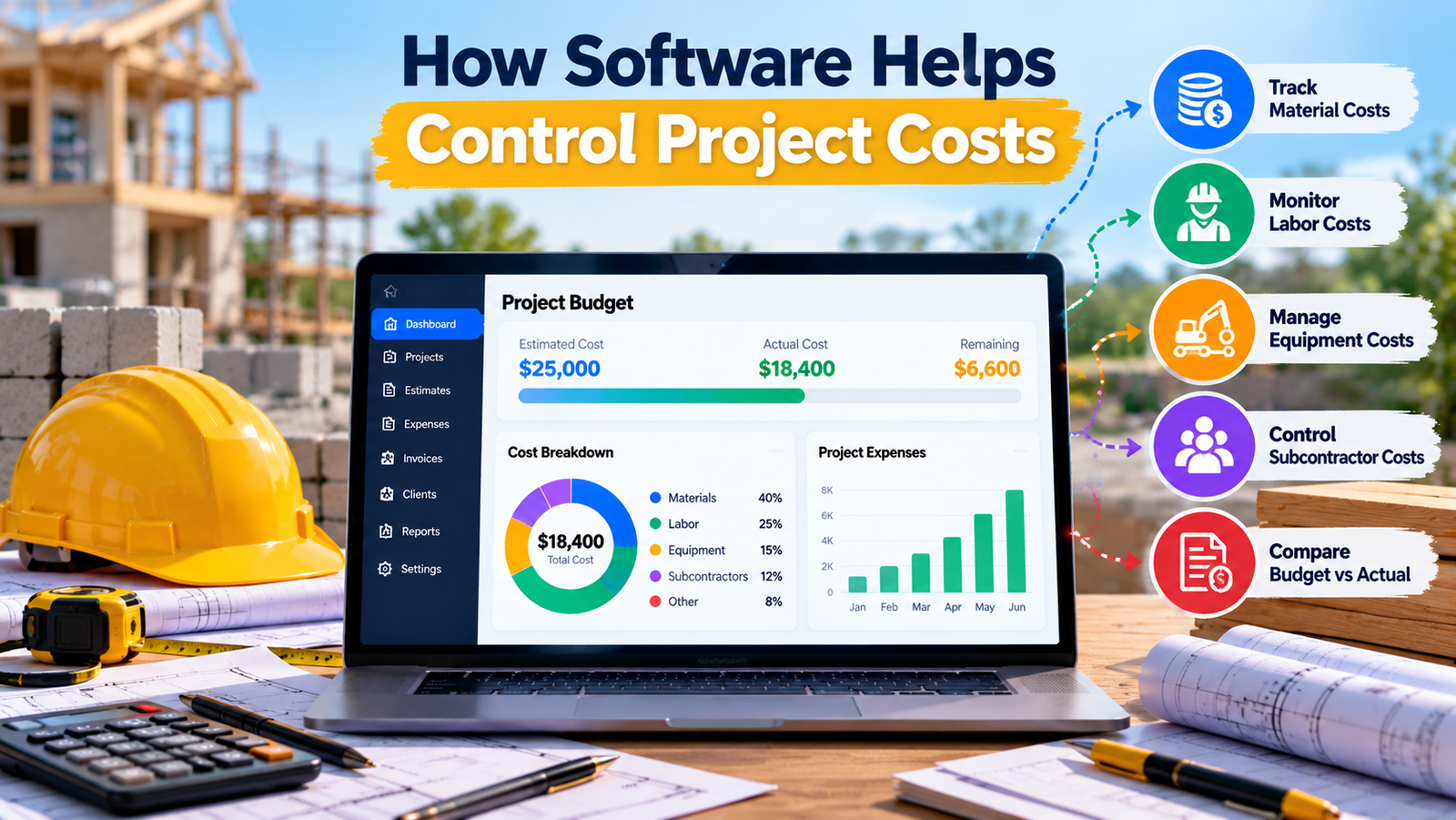
A contractor can complete a job on time and still earn less profit than expected. This may happen when material prices rise, contractor software for small business, or an estimate misses an important expense.
Good cost tracking gives owners a clearer picture of each project’s financial performance. Before work starts, contractors can record estimated labor hours, material costs, equipment charges, and other expected expenses. During the job, they can compare actual spending with the original budget.
For example, contractor software for small business estimates that a kitchen project will cost $8,000 to complete. The estimate includes materials, labor, transport, and equipment. During the project, the owner records each expense and notices that material costs are higher than expected.
With updated records, the owner can review the reason for the difference and discuss any approved changes with the client. Without reliable records, the problem may remain hidden until the final invoice.
Contractor software for small business can support this process when it includes expense tracking, job costing, and useful financial reports. Some products also allow owners to compare costs across multiple jobs.
These records can help contractors answer important questions:
- Which types of jobs produce better profits?
- Which materials cause the biggest cost changes?
- Are workers spending more hours than planned?
- Do estimates cover the full cost of a project?
- Which customers or projects have outstanding payments?
The answers can improve future estimates and business planning. Contractors can also use past job records to set more realistic prices.
However, software reports are only as accurate as the information entered. Owners should review expenses regularly and correct mistakes before relying on the results.
Choosing Affordable Software for a Growing Business
Small contractors often need to control monthly expenses. A costly system with many advanced features may not be the best choice for a business with only a few workers.
Start by deciding how much the business can spend each month. Then compare software based on the features that solve current problems. Avoid paying for tools that the team is unlikely to use.
When comparing contractor software for small business, consider these points:
Pricing and extra fees: Check monthly or annual costs, user limits, setup charges, and fees for extra features. Some providers offer different plans based on business size.
Ease of use: The system should be simple enough for owners and workers to learn. A complicated tool may create more work instead of saving time.
Mobile access: Contractors often work outside the office. A suitable mobile app can help them view schedules, check customer details, and update job records from the field.
Customer support: Check how the provider handles technical problems. Helpful support can reduce delays when the system stops working or users need assistance.
Data security: Customer details, invoices, and business records need protection. Review account permissions, backup options, and security practices.
Integrations: Some contractors use separate accounting, payroll, or payment systems. Software that connects with existing tools may reduce duplicate data entry.
It is also wise to test a free trial or request a product demonstration when available. contractor software for small business, such as creating an estimate, scheduling a job, and preparing an invoice.
Business Process Automation in Healthcare for Faster and Better Patient Care
Ask the team for feedback before making a final decision. A tool that works well for the owner may still be difficult for workers to use.
Common Mistakes Contractors Should Avoid
Choosing software without a clear plan can waste both money and time. Contractors should understand common mistakes before moving their records into a new system.
- Buying Too Many Features
Some businesses select a product because it offers many tools. However, advanced reports or complex project controls may not be useful for a small team.
Choose the features that match your current work. You can upgrade later if the business grows and needs more support.
- Ignoring Training
Workers may avoid using a system if they do not understand it. Before launching the software, show employees how to update job details, record expenses, and check schedules.
Simple instructions can help everyone follow the same process.
- Moving Records Without Checking Them
Old spreadsheets may contain duplicate customer records, contractor software for small business, or missing details. Importing everything without review can carry these problems into the new system.
Clean the records before transferring them. Check important customer information, unpaid invoices, and active project details.
- Forgetting About Data Backups
Digital records need proper protection. Contractors should understand how the provider backs up information and how records can be recovered after an issue.
Access should also be limited to people who need the information for their work.
- Failing to Review Results
After adopting contractor software for small business, owners should check whether it improves daily operations. Review the time spent preparing estimates, the number of overdue invoices, and the accuracy of project budgets.
If a feature creates extra steps without providing clear value, adjust the workflow or ask the provider for help.
Conclusion
Running a contracting business requires careful planning, clear communication, and strong cost control. Estimates, schedules, invoices, customer records, and expenses all affect how smoothly a project runs.
How AI Business Process Automation Helps Companies Work Smarter
The right contractor software for small business can help bring these tasks together and reduce the time spent on routine paperwork. However, the best choice is not always the product with the most features. It is the one that fits the company’s budget, team size, and daily work.
Start by identifying the biggest business problems. Compare essential features, check pricing, test the system, and train workers before moving all operations into it. Review the results regularly and make changes when needed.
With a practical plan and accurate records, small contractors can manage jobs more clearly, serve clients better, and make stronger decisions as the business grows.
contractor software for small business
2 thoughts on “Contractor Software for Small Business to Manage Projects”