

Business owners often hear that they should network, but attending every event is not a good strategy. The better approach is to choose business networking events that match your goals, audience, industry, and available time.
A useful event can lead to a customer, referral partner, supplier, mentor, employee, or business idea. It can also help you learn what other companies are facing. Recent small business guidance points to the same idea. A clear goal before an event and timely follow-up afterward can make networking more productive.
The value of business networking events is not limited to exchanging business cards. Strong results often come from a few meaningful conversations that continue after the event.
What Makes Business Networking Events Worth Attending
Not every event deserves a place on your calendar. Before registering, look at who usually attends, what industries are represented, the size of the group, and the reason people are meeting.
Local meetups can work well for companies that depend on nearby customers. Industry gatherings may be better for specialist services because attendees already understand the problems your business solves. Larger conferences can provide more contacts, but they can also make it harder to have deeper conversations.
Business networking events are more useful when the audience matches your target market or the people who can introduce you to that market. For example, a commercial photographer may gain more from meeting agencies, event planners, and local brands than from attending a general gathering with no clear audience.
Event structure matters too. Some gatherings use open conversation, while others use introductions, roundtables, speed networking, workshops, or small discussion groups. Structured formats can make it easier to meet several relevant people without spending the whole evening trying to enter random conversations. Current event guidance also stresses that purpose, guest selection, and format affect the quality of connections.
Look for signs that the organizer cares about the attendee experience. A clear schedule, useful topic, relevant guest list, and simple follow-up system can tell you more than an attractive event poster.
How to Prepare Before You Attend
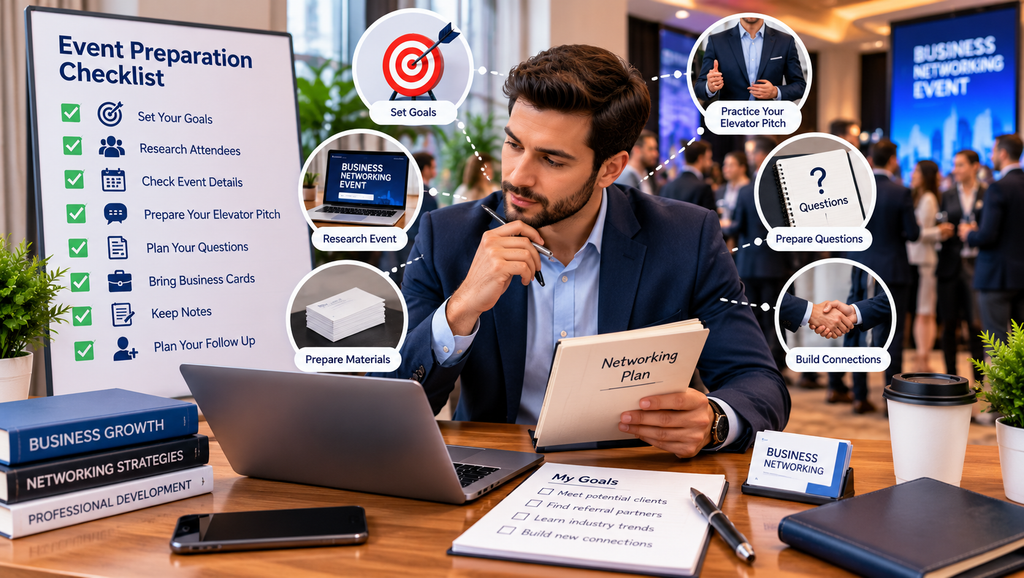
Walking into business networking events without a plan can leave you with many names and very few useful connections.
Start by choosing one main goal. You might want three potential referral partners, two people who understand your industry, or one conversation with a company that could become a client.
Prepare a short introduction that explains what you do in plain language. You do not need a long sales pitch. Tell people who you help, what problem you solve, and what type of connection you are hoping to make.
Research the organizer and, when possible, review the attendee list. This can help you identify people worth meeting. Do not plan to speak only with senior executives or people who look like immediate buyers. A useful connection can come from many roles.
Bring a simple way to record notes. After each conversation, write down something memorable about the person and a possible reason to follow up. This is more useful than collecting a large stack of business cards.
For business networking events, preparation should also include questions. Ask what the person works on, what type of customers they serve, what challenges they are facing, or what brought them to the event.
Good questions create better conversations than trying to explain your entire business.
How to Have Better Conversations at the Event
The best business networking events are usually less about how many people you meet and more about the quality of the conversations you have.
Start with simple questions. Ask someone about their business or the reason they came to the event. Listen carefully to the answer and look for common ground.
Avoid turning the first conversation into a sales presentation. If someone mentions a problem that your business can solve, explain your service briefly. If there is no clear fit, keep the conversation friendly and move on.
Give something useful when you can. You might recommend a local provider, share an idea, introduce two people, or mention a resource that could help.
This approach can make business networking events feel more natural because the conversation is based on mutual value rather than immediate selling.
You should also pay attention to people who are good connectors. Some attendees know many business owners and enjoy making introductions. Building a relationship with these people can create opportunities that you could not reach alone.
If you meet someone who seems like a strong connection, ask whether they would like to continue the conversation after the event. A short coffee meeting or online call can be more valuable than trying to discuss everything in five minutes.
How to Follow Up Without Being Pushy
The work after business networking events is often where useful connections become real relationships.
Follow up within a few days while the conversation is still fresh. Mention something specific you discussed so the message does not feel like a generic sales email.
For example, if someone mentioned that they were looking for a web designer, you could send a relevant resource or introduce them to a trusted contact. If you discussed a shared industry issue, send a short message continuing that conversation.
Do not immediately ask every new contact to buy something or send you referrals. Give the relationship time to develop.
Keep notes about your contacts and set a reasonable reminder for future follow-up. You may discover that one person is a good referral partner while another is better as an industry contact.
Business networking events should become part of a wider relationship process rather than a one-time activity. Current small business networking guidance recommends focusing on a small target, finding the right rooms, and using repeatable follow-up rather than simply attending more events.
You can also connect with people online after meeting them in person. A short message, useful comment, or occasional check-in can keep the relationship active without becoming intrusive.
How to Measure Your Networking Results
It is easy to measure business networking events by the number of contacts collected, but that number does not tell you much.
Track useful outcomes instead. Record how many relevant conversations you had, how many follow-ups were completed, how many introductions were made, and whether any conversations became leads, partnerships, or customers.
Give each event a simple score. Consider the quality of attendees, the number of relevant conversations, the cost, the time required, and the opportunities created.
After attending several business networking events, patterns should become easier to see. You may find that smaller local groups produce better referrals than large conferences. Or you may discover that industry workshops lead to stronger partnerships than general meetups.
This information can help you decide where to spend your time next.
Do not expect every event to produce immediate revenue. Some relationships may take months before they create a business opportunity. The goal is to build a network that becomes more useful over time.
Business networking events can also provide market research. Conversations with other owners can reveal common customer complaints, pricing concerns, hiring issues, technology needs, or gaps in local services.
That information can influence your products and marketing. A networking conversation may reveal a problem that customers rarely explain through surveys or online forms.
Conclusion
Business networking events can help small businesses find customers, referral partners, suppliers, mentors, and useful information. Their value depends less on attendance numbers and more on choosing the right event, preparing well, having genuine conversations, and following up afterward.
Alignable Boston Can Help Local Businesses Build Better Connections
Start with a clear goal. Pick events where the attendees are relevant to your business. Ask useful questions and listen before presenting your offer. After the event, continue the strongest conversations with a personal follow-up.
How Much Does Amazon Make a Second? Revenue and Profit Explained
Over time, review which business networking events create the best connections. Keep attending the formats that produce useful relationships and stop spending time on gatherings that do not fit your goals.
A focused networking plan can turn regular events into a practical source of relationships, referrals, knowledge, and future business opportunities.
1 thought on “Business Networking Events Can Create Better Opportunities for Small Businesses”