
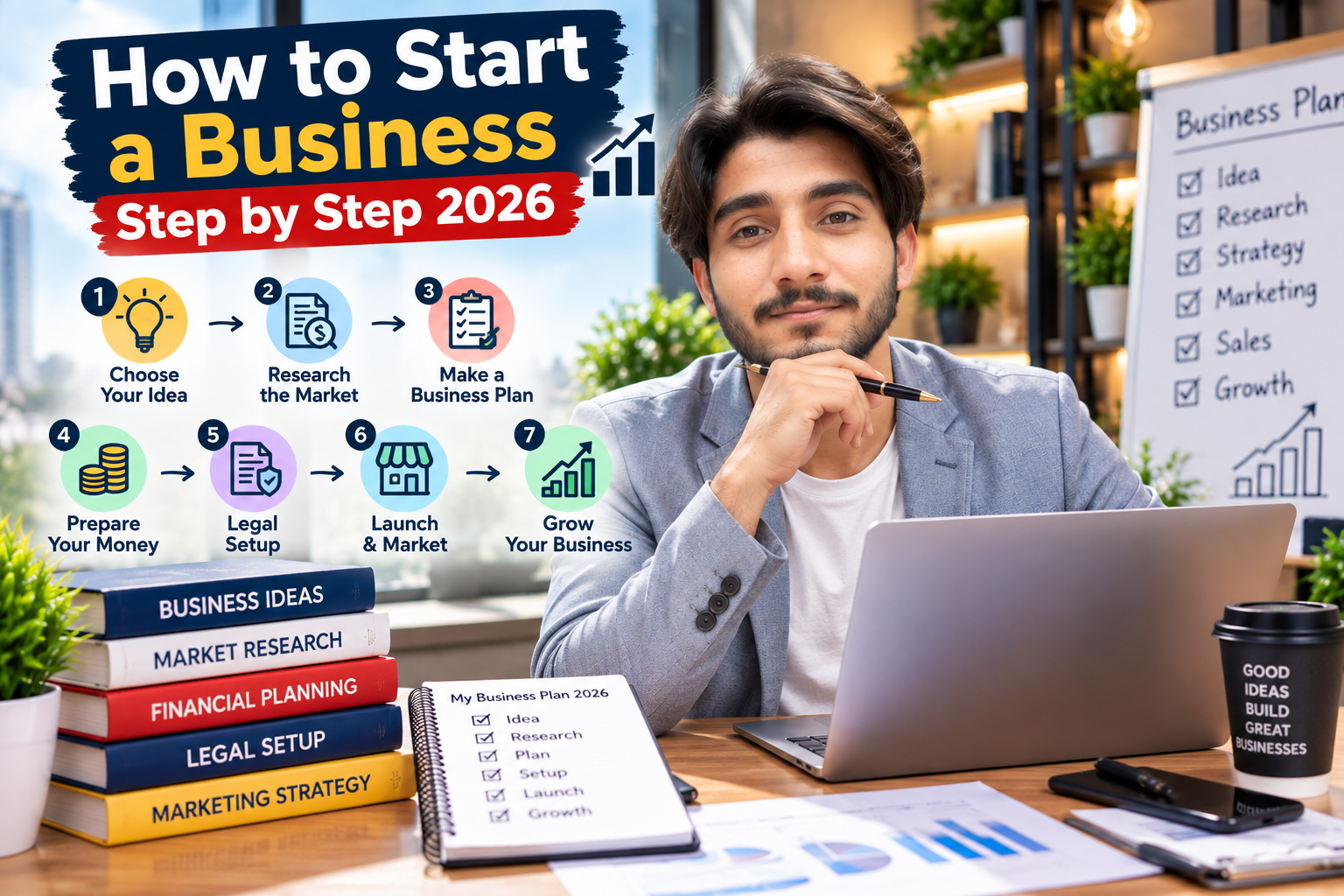
Starting a business in 2026 becomes easier when the process is broken into clear actions. Many new owners have a good idea but are unsure where to begin, what to do first, or how much money they need. Learning how to start a business step by step 2026 can help turn an idea into a working business without trying to handle everything at once.
The basic process includes choosing an idea, checking demand, creating a plan, estimating costs, choosing a business structure, preparing the offer, setting up sales channels, marketing the business, and tracking results. Legal and tax steps depend on the country and type of business, so local rules should be checked before launch. For beginners, how to start a business step by step 2026 should begin with simple research rather than a large financial commitment.
Choose Your Business Idea and Check the Market
The first part of learning how to start a business step by step 2026 is choosing a clear business idea. A useful idea usually solves a problem, saves customers time, provides a needed product, or offers a service people already pay for.
Start by writing down what the business will sell and who is most likely to buy it. Avoid trying to serve everyone. A specific customer group makes it easier to create an offer, set a price, and choose marketing channels.
Market research should come before major spending. Search for similar businesses and study their products, prices, reviews, websites, and customer complaints. Look for questions customers ask again and again. These can show areas where a new business may provide a better service.
For anyone asking how to start a business step by step 2026, customer research is one of the most useful early tasks. Speak with potential customers, run a small survey, or test interest with a simple landing page. You do not need a large audience to learn whether people are interested.
Next, write a short business plan. It can be one or two pages at the beginning. Include the product or service, target customer, pricing idea, competitors, expected costs, marketing plan, and first sales goal.
Your plan should answer one simple question: How will this business make money? This question is central to how to start a business step by step 2026 because a clear revenue model helps guide later decisions.
The business owner should also decide whether the business will be online, physical, or a mix of both. An online store has different needs from a restaurant or repair service. This choice affects equipment, staff, location, licenses, delivery, and startup costs.
Prepare Money, Legal Setup, and Business Operations
A major part of how to start a business step by step 2026 is preparing the financial side before opening. Make a list of startup expenses and monthly expenses separately.
Startup expenses may include equipment, inventory, website work, registration, branding, packaging, professional fees, and initial advertising. Monthly expenses may include rent, software, salaries, utilities, shipping, marketing, and supplier payments.
Create a basic cash-flow estimate for the first several months. This shows how much money may be needed before sales become steady. Do not assume every sale becomes profit. A business must pay its operating costs first.
Pricing should be based on real numbers. Calculate the cost of producing or delivering the product or service, then consider other expenses and the price customers are willing to pay. A clear budget is a basic part of how to start a business step by step 2026.
The legal setup is another major task. Depending on where you live, you may need to select a business structure, register a business name, obtain licenses or permits, register for taxes, and arrange insurance.
When researching how to start a business step by step 2026, use official government sources for current registration, tax, licensing, and permit rules. Requirements can change, so current information matters.
Keep personal and business finances separate where appropriate. A dedicated business bank account and clear records can make income and expenses easier to track.
Next, prepare the basic operating system. Decide how customers will contact you, how orders will be received, how payments will be collected, how products will be delivered, and how customer questions will be handled.
An online business may need a domain, website, business email, payment processor, product pages, and analytics. A local business may also need a location, equipment, staff schedules, inventory storage, and payment tools.
Launch, Market, and Improve Your Business
Once the setup is ready, the next stage of how to start a business step by step 2026 is getting the first customers. A small test launch can be useful before spending heavily on advertising.
Start with a limited group of customers or a small product range. Watch how people respond. Ask what they liked, what confused them, and what they would change.
Your marketing message should quickly explain what you sell, who it is for, and why someone should consider buying it.
Choose marketing channels based on your target customers. Search traffic can help people find a business when they are already looking for a product or service. Social media can help with visibility and customer communication. Email can help with repeat customers. Local listings can help service businesses reach nearby buyers.
Do not try to use every platform at the same time. Pick a few channels that fit the business and measure the results.
Search engine optimization can help a website gain unpaid search traffic over time. Use clear page titles, useful content, descriptive URLs, internal links, fast pages, and relevant keywords. Avoid repeating the same keyword unnaturally.
When learning how to start a business step by step 2026, remember that the first version does not need to be perfect. It needs to work well enough for real customers.
Track results after launch. Useful numbers include sales, revenue, expenses, profit, average order value, customer acquisition cost, repeat purchases, and website conversions.
Do not expand too quickly. Adding products, employees, locations, or advertising can increase costs. Make changes based on sales data and available cash. This is another practical lesson from how to start a business step by step 2026.
A business can also set goals for the first 30, 60, and 90 days. These might include getting the first customers, reaching a sales target, improving website conversions, or building repeat customers.
Conclusion
Learning how to start a business step by step 2026 is mainly about turning a large goal into smaller tasks. Start with a clear idea, identify the customer, research the market, and create a simple plan before spending heavily.
Then prepare the budget, estimate cash needs, choose the right legal structure, complete required registrations, and build the basic operating system. Keep business records organized and separate business costs from personal spending where appropriate.
The next part is the launch. Test the offer with real customers, choose suitable marketing channels, make the buying process simple, and track sales and expenses. Use customer feedback to fix weak points.
The most useful part of how to start a business step by step 2026 is the focus on action and review. A business does not need to be perfect on day one. The owner can launch a simple version, learn from customers, and make practical improvements.
If you are still deciding how to start a business step by step 2026, begin with the smallest workable version of your idea. Confirm that people want it, control your costs, keep good records, and improve the business based on real results.
A new owner can use how to start a business step by step 2026 as a simple checklist: choose the idea, test demand, plan the money, complete the legal setup, build the offer, launch, market, measure, and improve.
1 thought on “How to Start a Business Step by Step 2026: Complete Guide”