

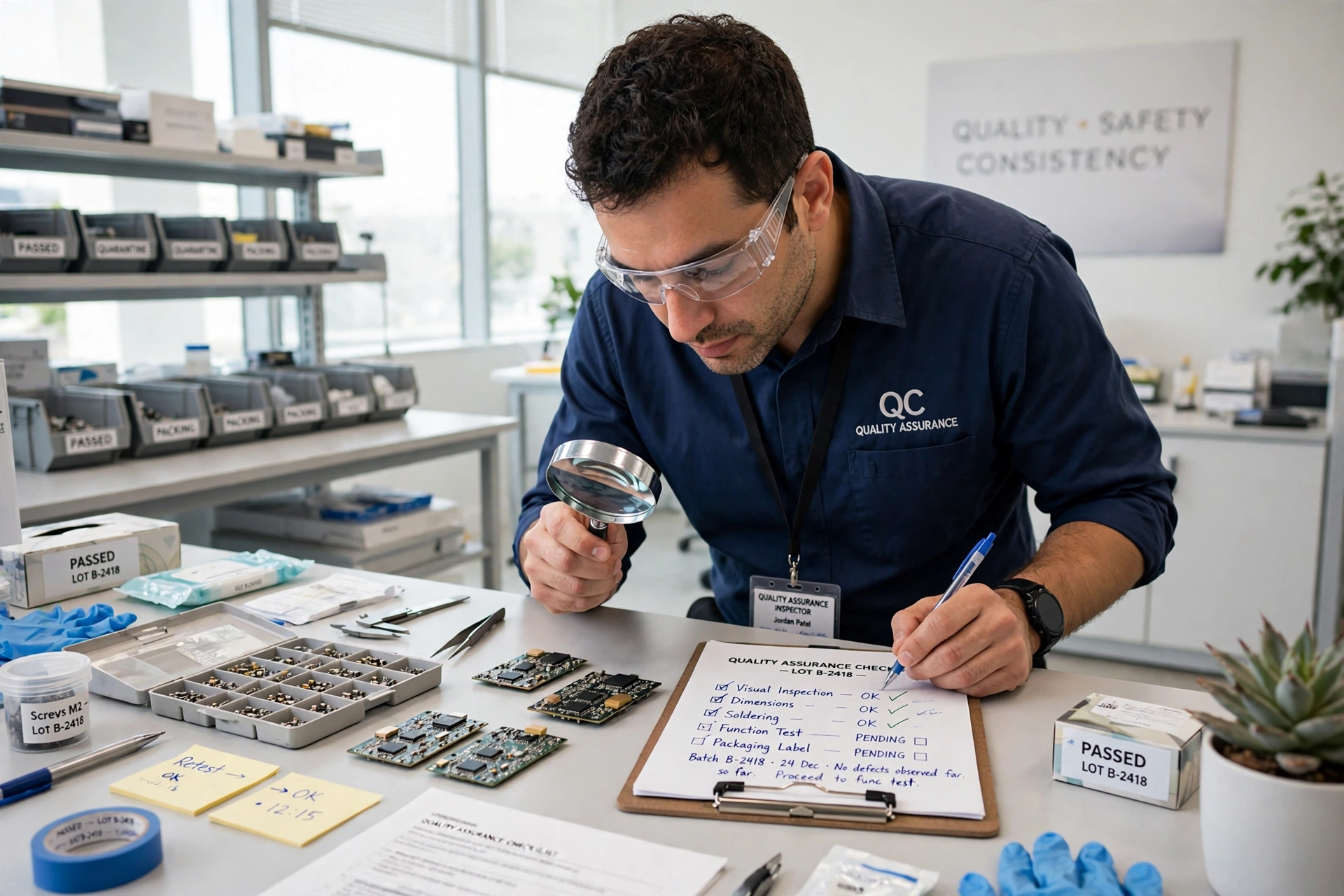
Quality Assurance Best Practices for Small Business Success in 2026
Introduction
Every small business makes promises to its customers: a product that works as described, a service delivered on time, a website that loads and a checkout that does not fail. When those promises break, customers leave.
Quality assurance is how a small business keeps those promises: planned checks and habits that catch problems before customers find them. Instead of fixing mistakes after a complaint, you build checks into your work so mistakes are rare.
Many small business owners think quality assurance is only for software companies or factories. That is not true. Any business that sells a product or a service can use it. This guide explains what it is, how it differs from quality control, the types of testing, and how to build a simple QA process.
Table of Contents
What Is Quality Assurance?
Quality assurance is a planned and systematic way of making sure a product or service meets the quality standards you set. It focuses on the process — how work is done — rather than only checking the finished result.
A small business uses QA in many everyday ways: a web shop checks every new product page before it goes live, a service company uses a checklist before sending work to a client, and a software team runs tests before each release. The goal is always the same: prevent problems instead of fixing them later.
It also builds trust. Customers who get the same good experience every time come back and recommend you to others. The International Organization for Standardization (ISO) explains how ISO 9001 helps organizations of every size improve quality and meet customer expectations.
Quality Assurance vs Quality Control
People often mix up QA and QC, but they are two different parts of quality management. Quality assurance asks: are we working the right way? It sets standards, writes checklists, trains staff and audits how work is done. It happens before and during the work, and its job is to prevent defects.
Quality control asks: is this finished item good enough? It inspects and tests the finished product or service and catches defects before they reach the customer. It happens after the work.
A bakery that writes a recipe, trains staff and checks the oven temperature every morning is doing QA. The same bakery tasting a finished loaf and removing burnt ones is doing QC. You need both, but QA stops most problems before they happen. The American Society for Quality (ASQ) explains that QA covers almost the whole quality system, while QC is a smaller part focused on inspection.
| Aspect | QA | QC |
|---|---|---|
| Focus | The process | The finished product |
| Goal | Prevent defects | Find defects |
| When it happens | Before and during work | After work is done |
| Typical activities | Standards, checklists, training, audits | Inspection, measurement, testing |
Types of Quality Assurance Testing
Testing is the practical side of QA. Different types catch different problems, and a small business can use the ones that fit its work.
Functional testing checks that a product does what it is supposed to do: a checkout button completes an order and a login page rejects the wrong password.
Usability testing checks that real people can use the product easily. Menus must be clear and signup forms must not confuse new users.
Performance testing checks how a product behaves under load: a website must still load quickly when many visitors arrive at once.
Security testing checks that data and accounts are protected: passwords stored safely, payment pages encrypted, and private data open only to the right people.
Compatibility testing checks that a product works in different places: different browsers, phones and computers, and both new and older devices.
Regression testing checks that a fix or a new feature did not break something that worked before. Re-run the key tests after every change. The Atlassian guide to types of software testing describes these test types in detail, including unit, integration and end-to-end testing.
You do not need all of these on day one. Start with functional and usability testing, then add the others as your business grows.
How to Build a Quality Assurance Process in 7 Steps

- Set your quality standards. Write down what good looks like for your product or service. A product page needs a clear title, correct price and working images.
- Map your workflow. Write down each step from start to finish: who does what, in which order, and what the handoff looks like. Most quality problems hide in the gaps between steps.
- Add checks at the right points. Put a short checklist at each step where mistakes are common. A writer checks facts and links. A developer runs tests before a release.
- Assign one owner for quality. One person must own the QA process, even in a team of three. Without an owner, checks are skipped when work gets busy.
- Use simple tools. Start with checklists and a bug log. As you grow, add test management or automation tools. Our guide to AI tools for small business shows how automation takes over repetitive checks.
- Test with real users. Before a launch, ask a few real customers or staff to try the product. They will find confusing steps and broken links your team misses.
- Review and improve every month. Look at the problems found, the complaints received and the checks that were skipped. Fix the process, not just the single mistake. Quality assurance works best when it improves a little every month.
Quality Assurance Tools and Methods Compared
The right tool depends on your size, budget and what you test. A checklist in a shared document is enough for many small businesses.
| Tool or Method | Best For | Cost Level | Effort to Start |
|---|---|---|---|
| Checklists and shared documents | Very small teams, service businesses | Very low | Low |
| Manual testing | Websites, apps, physical products | Low | Low |
| Test management tools (TestRail, Zephyr) | Teams with many test cases | Moderate | Medium |
| Automated testing (Selenium, Playwright) | Software with frequent releases | Moderate | High |
| Bug tracking (Jira, Trello) | Recording and fixing problems | Low to moderate | Low |
| ISO 9001 quality management system | Businesses that need formal certification | Moderate to high | High |
Start with the simplest option that covers your needs.
Benefits of Quality Assurance
- Fewer customer complaints. Problems are caught before they reach customers, so refunds and angry emails drop.
- Lower costs. Fixing a problem during the work is far cheaper than fixing it after a customer finds it.
- A stronger reputation. Customers trust a business that delivers the same good experience every time, and that trust brings repeat orders.
- Faster launches. A clear QA process removes last-minute panic. When checks are part of the routine, launches happen on schedule instead of slipping.
- Happier teams. Clear standards mean less arguing about what is good enough. Everyone knows the bar and how to reach it.
- Better decisions. A bug log and regular reviews show where problems keep coming from, so you can fix the cause, not the symptom.
Good quality assurance also protects your finances. Fewer refunds and fewer lost customers mean steadier cash flow. Our guide to compliance management systems shows how planned checks help a small business stay in control.
Common Quality Assurance Mistakes to Avoid
- Testing only at the end. Checking quality only before launch finds problems when they are most expensive to fix. Build checks into every step.
- No written standards. When quality lives only in one person’s head, it leaves when they are away. Write the standards down.
- Skipping regression tests. A new feature can break an old one. Always re-test the key features after a change.
- Testing with the same people who built it. Builders know how a product should work, so they miss what a new user would find. Use fresh eyes.
- Ignoring small bugs. Small bugs teach customers that your product is unreliable. Log every problem and fix the pattern, not just the single case.
- Collecting feedback and doing nothing with it. Customer complaints are free testing. If you do not act on them, you pay for the same test again.
A Practical Example: A Small Online Store
A small online store with four staff sells handmade candles. Orders grew, but so did complaints: wrong scents shipped, late deliveries and a checkout page that failed on phones.
The owner built a simple quality assurance process: standards for each product page, a packing checklist, and a weekly checkout test on a phone and a computer. One staff member owned the checks, and every complaint went into a shared log reviewed each Friday.
Within two months, wrong shipments fell to almost zero, and the checkout problem turned out to be an old payment plugin, which they replaced. Complaints dropped and repeat orders rose. Testing customer emails matters too — our guide to email marketing covers how to test campaigns before they reach your list.
Frequently Asked Questions
1. What is QA in simple terms?
Quality assurance is a planned way of making sure a product or service meets your quality standards. It improves the process so problems are prevented, instead of only finding defects in the finished product.
2. What is the difference between QA and QC?
QA is about the process and preventing defects. Quality control is about inspecting the finished product. QA happens before and during work, while QC happens after the work is done.
3. Do small businesses need QA?
Yes. Any business that sells a product or service benefits from it. Start with written standards, checklists and one person owning the process. No expensive software is needed to begin.
4. What are the main types of QA testing?
The main types are functional, usability, performance, security, compatibility and regression testing.
5. How much does QA cost for a small business?
It can cost almost nothing to start. Checklists, shared documents and a bug log are free. Costs grow only when you add test management or automation tools, and even then the cost is usually far less than refunds and lost customers.
6. What is ISO 9001 and does a small business need it?
ISO 9001 is the world’s best-known quality management standard. It sets out how to run a planned quality system. A small business does not need certification to use its ideas, but certification can help win larger customers.
Final Thoughts
It is not about perfection. It is about catching problems early, learning from them and making the same mistake only once. A small business that checks its work and listens to customers will beat a bigger competitor that ships fast and fixes problems later.
Start small. Write your standards, add a checklist where mistakes happen, name one owner, and review your bug log every month. That simple routine is the heart of quality assurance.
Disclaimer: This article is general information, not professional advice. Talk to a qualified professional before making decisions for a regulated product or service.






One Comment