General Liability Business Insurance and What It Covers
Every business faces risks during its daily work. A customer may slip inside a shop, a worker may accidentally damage a client’s property, or an advertisement may lead to a legal complaint. Even a small incident can create medical bills, legal costs, and financial stress for a business owner.
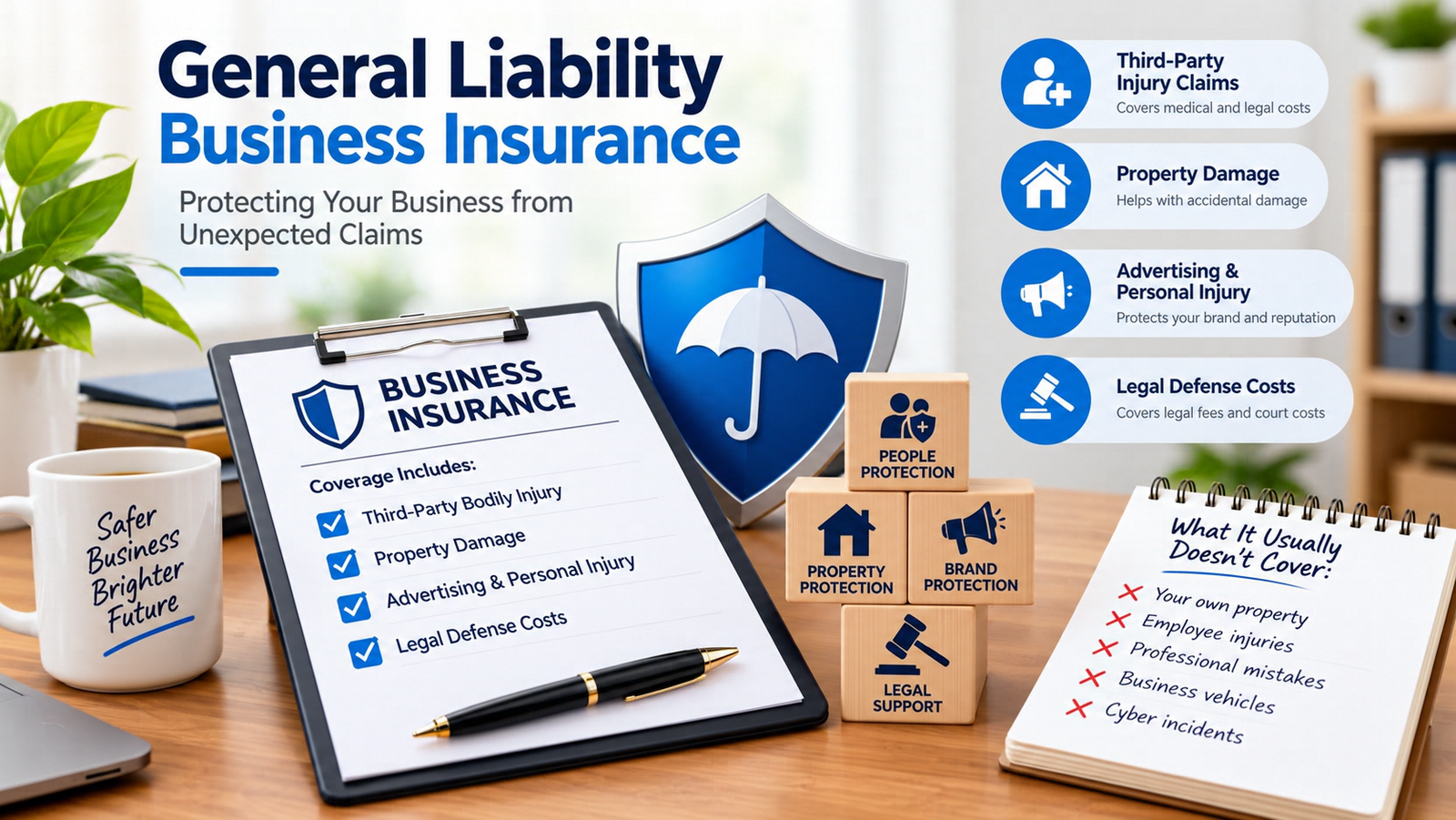
This is why general liability business insurance is worth considering. It helps protect a business against certain claims made by other people for injuries, property damage, and personal or advertising harm. It may also help pay legal defense costs when a covered claim leads to a lawsuit.
However, this insurance does not cover every business risk. It usually does not protect your own equipment, employee injuries, professional mistakes, or business vehicle accidents. Other policies may be needed for those risks.
This guide explains how general liability business insurance works, what it may cover, what it excludes, how policy limits work, and how to choose suitable protection. It also includes practical examples to help small business owners make informed decisions.
What Is General Liability Business Insurance?
Table of Contents
General liability business insurance is a type of commercial insurance that helps protect a company against certain claims made by third parties. A third party is someone outside your business, such as a customer, visitor, supplier, or member of the public.
The policy is also known as commercial general liability insurance, often shortened to CGL. It can help pay covered legal costs, settlements, and court judgments when a business is legally responsible for an injury or damage.
For example, imagine that a customer visits your grocery store and slips on a wet floor. The customer suffers an injury and asks your business to pay the medical costs. If the customer files a lawsuit, your insurance may help with legal defense costs and covered damages, based on the policy terms.
Another example involves a cleaning company. An employee visits a client’s office and accidentally damages an expensive computer while moving equipment. The client may ask the cleaning company to pay for repairs or replacement. A covered claim may receive help from the business’s liability policy.
These examples show why general liability business insurance can be useful for companies that deal with customers, visit client locations, sell products, or work with other businesses.
Who may need this insurance?
Many types of businesses may benefit from this coverage, including:
- Retail shops and grocery stores
- Restaurants, cafes, and food businesses
- Construction and repair companies
- Cleaning and maintenance services
- Freelancers who meet clients in person
- Marketing and advertising agencies
- Wholesale and distribution companies
- Event planners and service providers
- Small manufacturing businesses
- Contractors and independent workers
A home-based business may also need liability coverage if customers visit the property or business activities create risks for other people.
The need for general liability business insurance depends on the work you perform, the people you interact with, and the contracts you sign. Some landlords and clients may also ask for proof of insurance before allowing a company to work at their location.
What Does General Liability Business Insurance Cover?
The coverage depends on the policy, but commercial general liability insurance commonly focuses on bodily injury, property damage, and personal or advertising injury. Some policies also include limited medical payments for certain accidents.
Here are the main areas business owners should know about.
Bodily injury to other people
A business may face a claim if its activities cause physical harm to a customer, visitor, or another third party.
For example, a customer may trip over a loose cable at a shop. A visitor may get hurt because a display shelf falls. A restaurant guest may suffer an injury after slipping near the entrance.
A covered policy may help pay eligible medical costs, legal defense expenses, and damages if the business is found legally responsible.
Employee injuries are generally handled through workers’ compensation insurance rather than standard general liability coverage.
Damage to someone else’s property
A company may accidentally damage property owned by another person or business.
For example, a plumber may damage a customer’s wall while repairing a pipe. A moving company may scratch furniture while carrying it into a new house. A contractor may accidentally break a window while working at a client’s property.
General liability business insurance may help pay for covered repair or replacement costs and related legal expenses. The exact result depends on the policy wording and any exclusions.
Personal and advertising injury
Some liability claims do not involve physical injuries or damaged objects. They may involve harm caused by certain business statements, advertisements, or publications.
Depending on the policy, this coverage may apply to claims involving:
- Libel or slander
- Certain copyright violations in advertisements
- Certain privacy-related offenses
- Wrongful eviction or entry
- Other listed personal or advertising offenses
For example, a business may use an image in an advertisement without permission. The copyright owner could make a legal claim. If the claim falls within the policy terms, the insurer may provide legal defense and other covered payments.
Not every advertising dispute qualifies. The policy’s definitions and exclusions decide whether protection applies.
Medical payments for visitors
Some general liability policies include limited medical payments coverage. This may help pay certain medical expenses for a non-employee who suffers an accidental injury connected to the business premises or operations.
This type of payment may apply without first proving that the business was legally responsible. However, it has its own limits and conditions.
Legal defense costs
A lawsuit can cost money even if a business believes it did nothing wrong. Legal advice, document preparation, court work, and other defense costs can create a large bill.
A general liability business insurance policy may cover eligible defense costs for claims within its scope. The insurer may also appoint or approve legal counsel, depending on the contract.
Business owners should check whether defense expenses reduce the policy limit or are paid separately. This detail can affect how much coverage remains for a settlement or judgment.
What Does General Liability Business Insurance Not Cover?
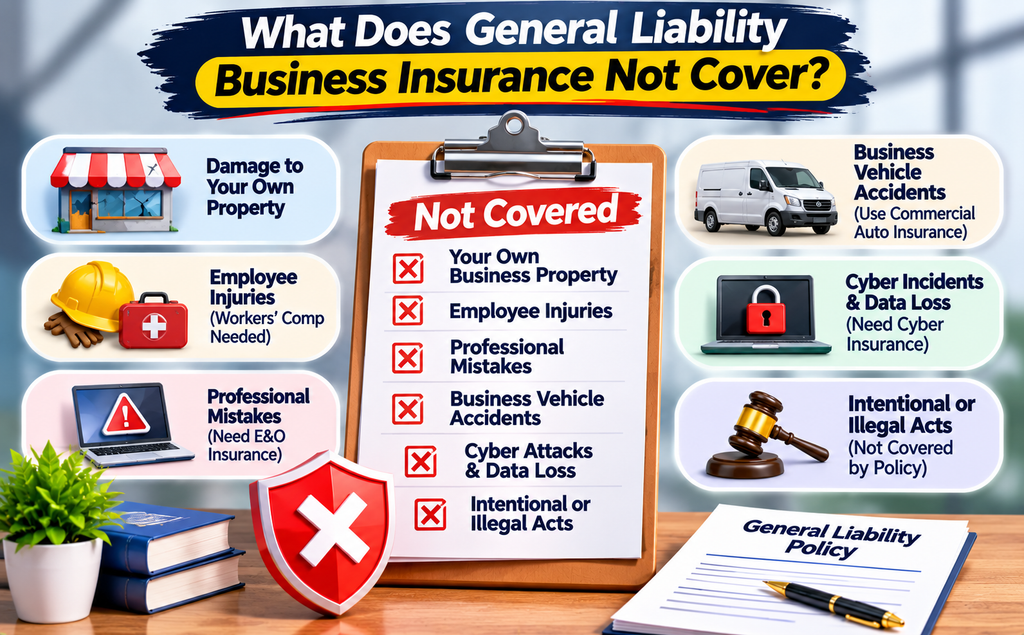
General liability coverage is useful, but it does not protect against every type of loss. Many business owners make the mistake of assuming that one policy covers all accidents, legal claims, and financial problems.
Knowing the exclusions can help you avoid gaps in your insurance plan.
Damage to your own business property
General liability insurance mainly deals with claims from other people. It usually does not pay to repair your own office, shop, furniture, stock, or equipment after a fire, theft, or storm.
Commercial property insurance may help cover these physical assets against covered events.
Employee injuries
If an employee gets hurt while performing work duties, workers’ compensation insurance is generally the relevant coverage in places where it applies.
This insurance may help with approved medical treatment and part of the employee’s lost wages, subject to local rules and policy terms.
Professional mistakes
A consultant may give incorrect advice. An accountant may make a reporting error. A designer may deliver work that fails to meet a client’s agreed requirements.
These situations may lead to claims about financial loss caused by professional services. Professional liability insurance, also called errors and omissions insurance, is usually more suitable for this type of risk.
Business vehicle accidents
A general liability policy usually does not cover accidents involving vehicles used for business activities. Companies that use cars, vans, or trucks may need commercial auto insurance.
This is especially relevant for delivery companies, contractors, transport services, and businesses that send workers to client locations.
Cyber incidents and data loss
A business may face problems after a data breach, ransomware attack, or loss of private customer information. Standard general liability insurance generally does not provide full cyber protection.
Cyber insurance may help with certain costs linked to data breaches, system attacks, and privacy claims, depending on the policy.
Intentional or illegal acts
Insurance policies generally exclude losses caused by deliberate wrongdoing or illegal acts. A business owner should never assume that a policy will pay for a claim caused by intentional harm.
Contract disputes and unpaid bills
A customer may refuse to pay an invoice, or a supplier may fail to deliver goods as agreed. These are usually contract or payment disputes rather than standard general liability claims.
Business owners may need legal advice or other forms of commercial protection for these issues.
Before buying general liability business insurance, read the exclusions carefully. Ask the insurer to explain any unclear terms and confirm whether separate coverage is needed for risks that matter to your company.
How Much Does General Liability Business Insurance Cost and How Do You Choose the Right Policy?
The price of general liability business insurance depends on several details. Two companies in the same city may receive different quotes because they perform different work, serve different customers, and have different claims histories.
There is no single price that fits every business.
Factors that affect the cost
Insurers may consider the following points when setting a premium:
- Type of business: A construction company may face different risks from an online consulting service.
- Business size: Revenue, number of workers, and the amount of work performed may affect the insurer’s risk review.
- Location: Local legal conditions, property risks, and business activity may affect pricing.
- Claims history: Previous claims may influence the price and terms offered.
- Coverage limits: Higher limits may lead to a higher premium.
- Deductibles: A policy with a deductible may cost less, but the business must pay that amount when a covered claim occurs.
- Services and operations: Work performed at customer locations may create different risks from work performed only online.
Ask more than one licensed insurer or broker for a quote. Compare the policy terms rather than choosing the cheapest offer.
Understand policy limits
A policy limit is the maximum amount an insurer will pay for a covered claim or group of claims, based on the contract.
Two common terms are:
- Per-occurrence limit: The maximum amount available for covered claims arising from one occurrence.
- General aggregate limit: The maximum amount available for certain covered claims during the policy period.
Some policies also have separate limits for products and completed operations or personal and advertising injury.
For example, a business may have a policy with a $1 million per-occurrence limit and a $2 million general aggregate limit. These figures are examples only. They are not a recommendation for every company.
A business with many visitors, large contracts, or higher-risk operations may need greater limits. An umbrella or excess liability policy may provide additional coverage above certain underlying policy limits.
How to choose suitable coverage
Start by reviewing your daily business activities. Think about where you work, who visits your premises, whether you enter customer properties, and whether your products could cause harm.
Then consider these steps:
- List the main risks connected to your work.
- Review contracts that require proof of insurance.
- Decide how much liability protection may be needed.
- Compare quotes from licensed insurance providers.
- Read exclusions, deductibles, and coverage limits.
- Check whether legal defense costs affect the policy limit.
- Ask how claims must be reported.
- Review the policy whenever your business changes.
A small shop that receives customers may have different needs from a contractor who works at several locations each week. A business that manufactures products may also need to review products and completed operations coverage.
Some small companies may qualify for a Business Owners Policy, often called a BOP. This package commonly combines general liability and commercial property coverage. However, it may not suit every company, and additional policies may still be needed.
Do not select general liability business insurance based on price alone. A low-cost policy may have limits or exclusions that do not match your business risks.
Frequently Asked Questions About General Liability Business Insurance
What is general liability business insurance?
It is commercial insurance that helps protect a business against certain third-party claims involving bodily injury, property damage, and personal or advertising injury. It may also cover eligible legal defense costs.
Is general liability insurance required by law?
Requirements vary by country, state, and industry. It is not a universal legal requirement for every business. However, landlords, clients, and contractors may require proof of coverage before signing an agreement.
Does general liability insurance cover employees?
Standard general liability coverage usually does not cover employee injuries during work. Workers’ compensation insurance is generally used for those claims where required or applicable.
Does this policy cover damage to my own property?
Usually, no. Damage to your own building, stock, equipment, or furniture generally requires commercial property insurance or another suitable policy.
Do freelancers need general liability insurance?
Some freelancers may benefit from it, especially if they meet clients, visit customer locations, or work with physical property. Freelancers who provide professional advice may also need professional liability coverage.
Does general liability insurance cover legal fees?
It may cover eligible legal defense costs for claims within the policy. The contract explains which expenses are covered and how they affect the policy limits.
Can I get general liability insurance for a home-based business?
Yes, insurers may offer business liability coverage for home-based companies. A standard home insurance policy may not fully protect business activities, so owners should check their existing coverage.
What is the difference between general liability and professional liability insurance?
General liability mainly covers certain third-party injury, property damage, and personal or advertising injury claims. Professional liability generally deals with claims that professional services, advice, or work caused a client’s financial loss.
Can I add more coverage later?
Some insurers allow businesses to change limits, add endorsements, or buy extra policies. Any change depends on the insurer’s approval and policy terms. Ask your provider before assuming new work is covered.
Final Thoughts
A business can face legal claims even during normal daily activities. A customer may get injured, a worker may accidentally damage someone else’s property, or an advertisement may lead to a complaint. These events can create costs that are difficult for a small company to manage alone.
Business Hazard Insurance and How It Protects Your Business
Superpages and How It Helps People Find Local Businesses
General liability business insurance can help protect a company against certain third-party claims and eligible legal expenses. It may be useful for shops, contractors, service providers, restaurants, and many other businesses.
However, this policy does not cover every risk. Employee injuries, professional mistakes, vehicle accidents, cyber incidents, and damage to your own property may require separate insurance.
Before buying a policy, review your business activities, compare coverage limits, and read the exclusions. Ask a licensed insurance professional to explain any terms you do not understand. Also check whether your clients, landlord, or contracts require specific limits.
The right insurance plan depends on the type of work you do and the risks your company faces. A careful review can help you choose suitable protection and avoid gaps that may cause problems later.