Business Hazard Insurance and How It Protects Your Business
Running a business takes time, money, and careful planning. You may have a shop, office, warehouse, restaurant, or home-based business. Whatever type of company you own, unexpected damage to your property can create serious financial problems. A fire, storm, theft, or act of vandalism could damage the place where you work and the equipment you need each day.
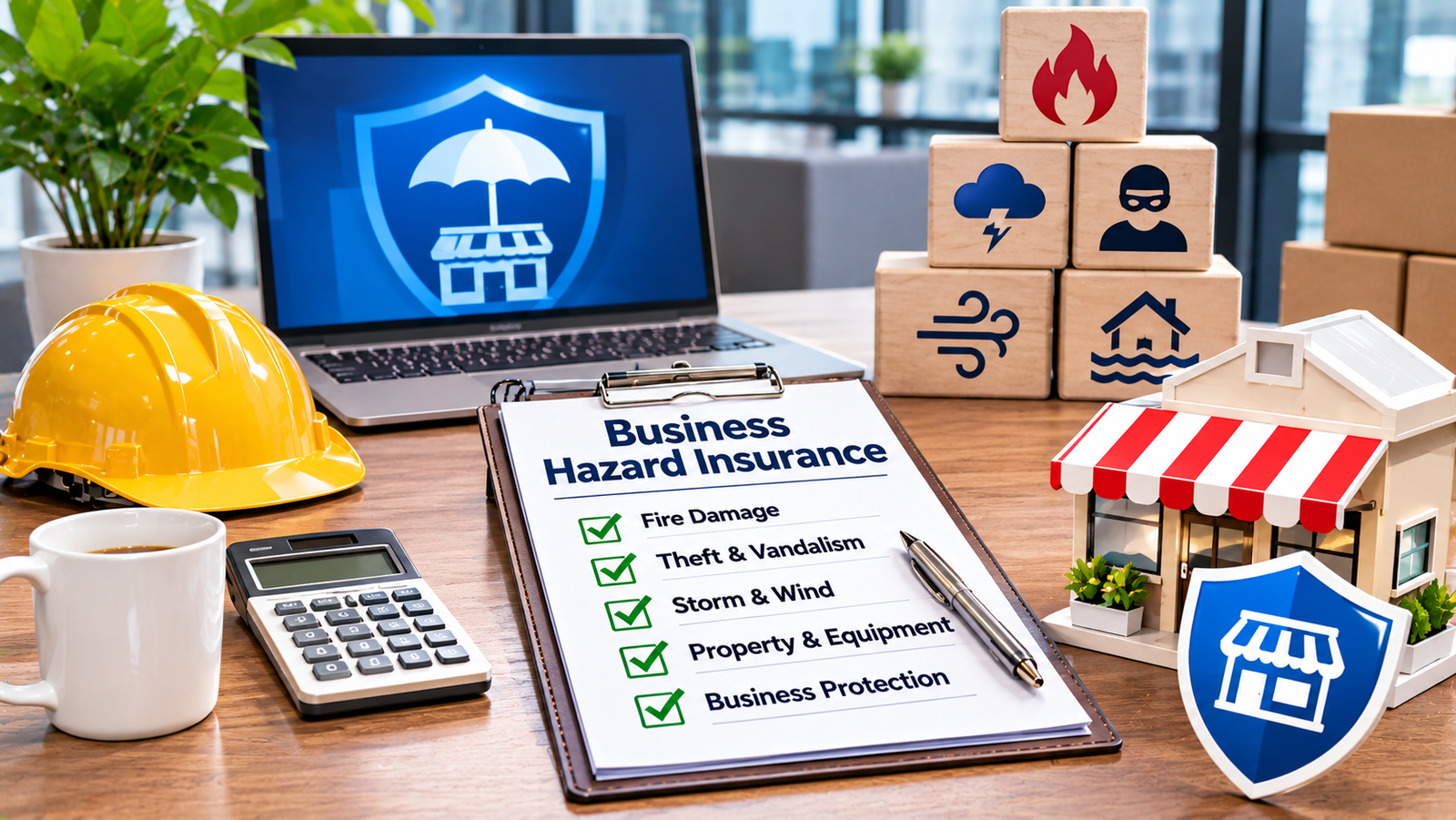
This is where business hazard insurance can help. It provides financial protection for eligible business property when a covered event causes damage or loss. It can help pay for repairs or replacement, based on your policy terms and coverage limits.
However, every policy is different. Some cover specific risks, while others offer wider protection. Business owners need to check what is included, what is excluded, and how much they may receive after a claim.
This guide explains business hazard insurance in simple terms. You will learn how it works, what it may cover, what affects its cost, and how to choose coverage that fits your business needs.
Table of Contents
What Is Business Hazard Insurance and How Does It Work?
Business hazard insurance is a type of commercial property insurance that helps protect the physical assets a company owns or uses. These assets may include a building, office furniture, computers, tools, machinery, stock, and other business equipment.
The term can mean slightly different things depending on the insurer and policy. Many insurance companies use names such as commercial property insurance or business property insurance for similar coverage.
The main purpose of business hazard insurance is to reduce the financial impact of certain unexpected events. If a covered event damages insured property, you can file a claim with your insurance company. The insurer reviews the claim and checks whether the damage falls within your policy.
For example, suppose you own a small clothing shop. A fire damages part of the shop, destroys several shelves, and ruins some of your stock. If your policy covers the fire damage and the affected property, the insurer may pay eligible repair or replacement costs, subject to your deductible, coverage limits, and other policy terms.
A deductible is the amount you must pay before your insurance starts paying for a covered claim. If your deductible is $1,000 and your approved claim is $6,000, you may receive $5,000, assuming the policy applies and no other limits affect the payment.
Who may need this coverage?
Business hazard insurance may be useful for:
- Retail shops and grocery stores
- Restaurants and cafes
- Offices and consulting firms
- Warehouses and storage facilities
- Manufacturing companies
- Contractors with tools and equipment
- Online sellers who store physical products
- Home-based businesses with business equipment
A company that owns its building may need protection for the structure and its contents. A business that rents space may need coverage for its own stock, furniture, computers, and other belongings. The landlord’s policy may cover the building but usually does not automatically protect everything the tenant owns.
What Does Business Hazard Insurance Cover?
The exact protection depends on the policy. Some policies cover only the risks listed in the contract. Others offer broader property protection, subject to stated exclusions and conditions.
Before buying business hazard insurance, make a list of the property your company needs to protect. This can help you compare policies and spot gaps in coverage.
Fire and smoke damage
Fire can damage walls, ceilings, electrical systems, furniture, stock, and equipment. Smoke may also harm products and machinery even when flames do not reach them directly. A policy that covers these events may help pay eligible repair or replacement costs.
Storm and wind damage
Strong winds, hail, and certain types of storm damage can harm roofs, windows, signs, and outdoor equipment. Whether a particular storm event is covered depends on the policy and any special limits or exclusions.
Theft and vandalism
A break-in can lead to stolen computers, tools, products, or other property. Vandalism may cause damage to doors, windows, walls, or business equipment. Some policies cover these losses, but theft conditions, security rules, and coverage limits may apply.
Business equipment and furniture
Many companies depend on computers, printers, desks, shelves, machines, and specialist tools. Business hazard insurance may cover these items when a listed or otherwise covered event damages them.
For example, a covered fire at a design office could damage computers and office furniture. Property coverage may help pay for eligible losses, based on the policy terms.
Stock and inventory
Retailers, wholesalers, and online sellers often keep valuable products in storage. A covered event could damage or destroy these goods before they reach customers. Business hazard insurance may include stock and inventory, but owners should check how the insurer values these items and whether special limits apply.
Building fixtures and improvements
If you own your business premises, your policy may cover parts of the building, such as walls, permanent fixtures, and certain built-in systems. Tenants may also need coverage for improvements they paid to install, depending on their lease and policy.
Temporary business closure
Property damage can force a company to close while repairs take place. Standard property coverage pays for covered physical damage, but it does not automatically cover all lost income.
Business interruption insurance, also called business income coverage, may help replace certain lost income and pay eligible operating expenses after a covered event. It often has separate rules, limits, and waiting periods.
For this reason, business hazard insurance and business interruption coverage should be reviewed together. They protect against different parts of the same problem.
What Business Hazard Insurance May Not Cover
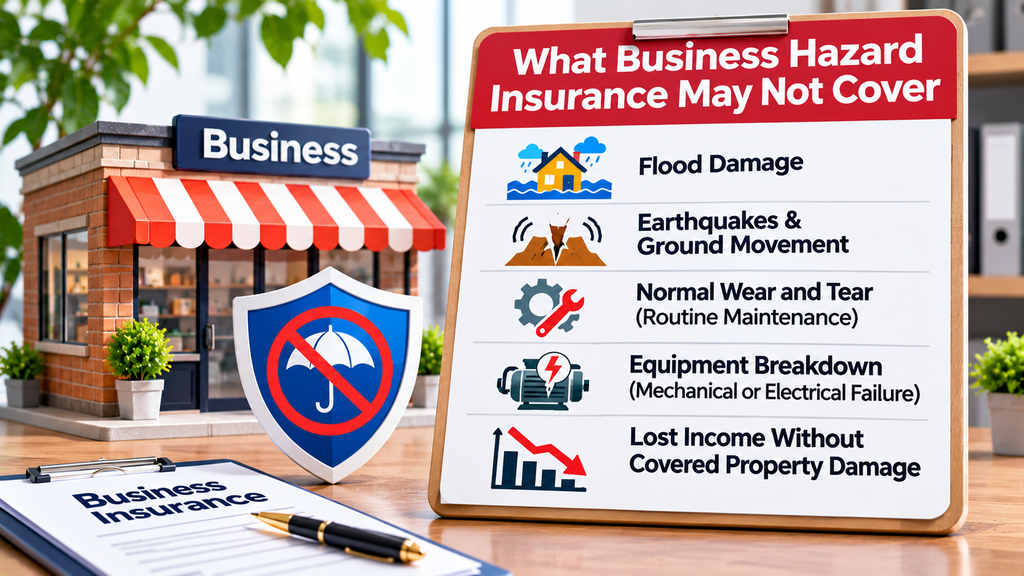
Buying a policy does not mean every type of damage will be paid for. Many claims are limited by exclusions, deductibles, conditions, and coverage limits.
Knowing these limits before a loss occurs can help you avoid surprises.
Flood damage
Flood damage is often excluded from standard commercial property policies. Heavy rain, overflowing rivers, storm surges, and other flood events may need separate coverage. Water damage from a burst pipe may receive different treatment, so check the exact wording.
Earthquakes and ground movement
Earthquakes, landslides, and similar events may be excluded or require special coverage. If your business operates in an area with these risks, ask an insurance professional about suitable options.
Normal wear and tear
Insurance generally does not pay for routine maintenance or gradual damage caused by aging. A roof that wears out over time or machinery that breaks down from long-term use may not qualify for a property claim.
Poor maintenance
A business owner is usually expected to maintain the building and equipment. Damage caused by neglected repairs may be excluded, depending on the policy and the facts of the claim.
Intentional damage
Policies generally exclude losses caused deliberately by the insured. Claims may also be denied when the policyholder provides false information or fails to meet important policy conditions.
Equipment breakdown
Damage caused by an internal mechanical or electrical failure may not be covered by standard property insurance. Some businesses need separate equipment breakdown coverage to address this risk.
Lost income without covered property damage
A drop in sales does not usually qualify as a property insurance claim on its own. Business income coverage often requires direct physical damage from a covered event before benefits apply.
To avoid gaps, ask the insurer for a written explanation of exclusions and optional coverage. Do not rely on a short summary or advertisement alone.
How Much Does Business Hazard Insurance Cost and How Can You Choose a Policy?
The cost of business hazard insurance varies by company. There is no single price that works for every business because insurers consider the property, location, business activity, and level of protection requested.
A small office with a limited amount of equipment may have different insurance needs from a warehouse holding expensive stock.
Factors that affect the price
Several details may affect your premium:
- Property value: Buildings, machinery, furniture, and stock all affect the amount of insurance needed.
- Location: Areas with higher risks of storms, fires, theft, or other covered events may cost more to insure.
- Business type: A restaurant, workshop, and office have different property risks.
- Building condition: Construction materials, age, maintenance, and safety features may affect the price.
- Coverage limits: Higher limits can increase the premium.
- Deductible: A higher deductible may lower the premium, but it also means paying more yourself after a claim.
- Claims history: Past losses may affect the insurer’s price or terms.
- Extra coverage: Flood protection, equipment breakdown coverage, and business interruption insurance may add to the total cost.
The best way to find a suitable price is to request quotes from several licensed insurers or agents. Compare the protection offered, not just the amount you pay each month or year.
How to choose the right policy
Start by listing the property your business owns or uses. Include the building, equipment, furniture, inventory, tools, and any improvements you have paid for.
Next, estimate the cost of repairing or replacing those items. Keep purchase receipts, invoices, photographs, and equipment records. These records can help you choose suitable coverage and support a claim if damage occurs.
Then, review the risks linked to your location and type of work. A shop in a flood-prone area may need different protection from an office in a low-risk area. A business that relies on specialist machinery may need to review equipment breakdown options.
Ask each insurer these questions:
- Which events are covered by the policy?
- Which events are excluded?
- Are stock and equipment covered at replacement cost or actual cash value?
- What deductible applies to each type of loss?
- Are there special limits for computers, tools, or valuable items?
- Does the policy include business interruption coverage?
- What records are needed to file a claim?
- Are there any safety or maintenance conditions I must follow?
Replacement cost generally refers to the cost of replacing an insured item with a similar one, subject to the policy terms. Actual cash value usually accounts for depreciation, so the payment may be lower than the cost of buying a new item.
Business owners should also check whether a lender or landlord requires specific coverage. Requirements can depend on the loan agreement, lease, and local rules. In the United States, certain Small Business Administration loan arrangements may include hazard insurance requirements for property used as collateral.
Do not choose a policy based on price alone. A cheaper plan may have lower limits, a higher deductible, or exclusions that leave important property unprotected.
Frequently Asked Questions About Business Hazard Insurance
What is business hazard insurance?
Business hazard insurance is a form of commercial property protection that may pay for covered damage to a business building, equipment, furniture, tools, or inventory. The exact coverage depends on the policy.
Is business hazard insurance the same as commercial property insurance?
The terms are often used for similar types of protection. However, insurers may use different names and offer different policy features, so check the contract rather than relying on the name alone.
Is business hazard insurance required by law?
It is not always required by law for every business. However, a lender or landlord may require it under a loan agreement or lease. Legal requirements also vary by location and business type.
Does business hazard insurance cover flood damage?
Flood damage is often excluded from standard commercial property insurance. Separate flood coverage may be available. Check the policy to learn how it defines a flood and which water-related losses it covers.
Does this insurance cover business equipment?
It may cover computers, tools, machinery, furniture, and other equipment when a covered event causes damage. Check the insured property list, limits, and exclusions before buying the policy.
Can a home-based business get this coverage?
Yes. A home-based company may be able to buy business property coverage for equipment, stock, and other business assets. A standard home insurance policy may offer limited protection for business property, so check with your insurer.
Does business hazard insurance pay for lost income?
Property coverage usually focuses on physical damage. Business interruption insurance may help cover certain lost income and ongoing expenses after a covered event, subject to its terms and limits.
How can I lower my insurance costs?
Compare quotes, review your coverage limits, consider a suitable deductible, maintain your property, and install safety measures where appropriate. Avoid cutting coverage that protects important business assets just to get a lower premium.
Final Thoughts
Unexpected property damage can place a heavy financial burden on a business. Repairing a building, replacing stock, or buying new equipment may cost more than an owner can comfortably pay at once.
Technology Business Incubator Meaning and How It Supports New Startups
Software for Business Management to Improve Daily Business Operations
Business hazard insurance can help reduce this risk by covering certain property losses caused by events listed in the policy. It may protect buildings, furniture, tools, computers, inventory, and other physical assets. However, exclusions, deductibles, limits, and claim conditions affect how much protection you receive.
Before choosing a policy, list your business assets, review the risks in your area, and compare offers from licensed insurance providers. Pay close attention to flood exclusions, equipment breakdown, replacement costs, and business interruption coverage.
The right choice depends on what your company owns, where it operates, and how much financial risk it can afford to take. Read the policy carefully and ask questions before signing.
Good insurance planning cannot prevent every loss, but it can help your business recover from a covered event with fewer financial surprises.





One Comment